
Global Rank 74th: How UNU Jogja’s Kosabangsa Program Resolves Giripurwo’s Drought
Published by Latifatussolikhah, 25 Jun, 2026
Est. 8 Minutes
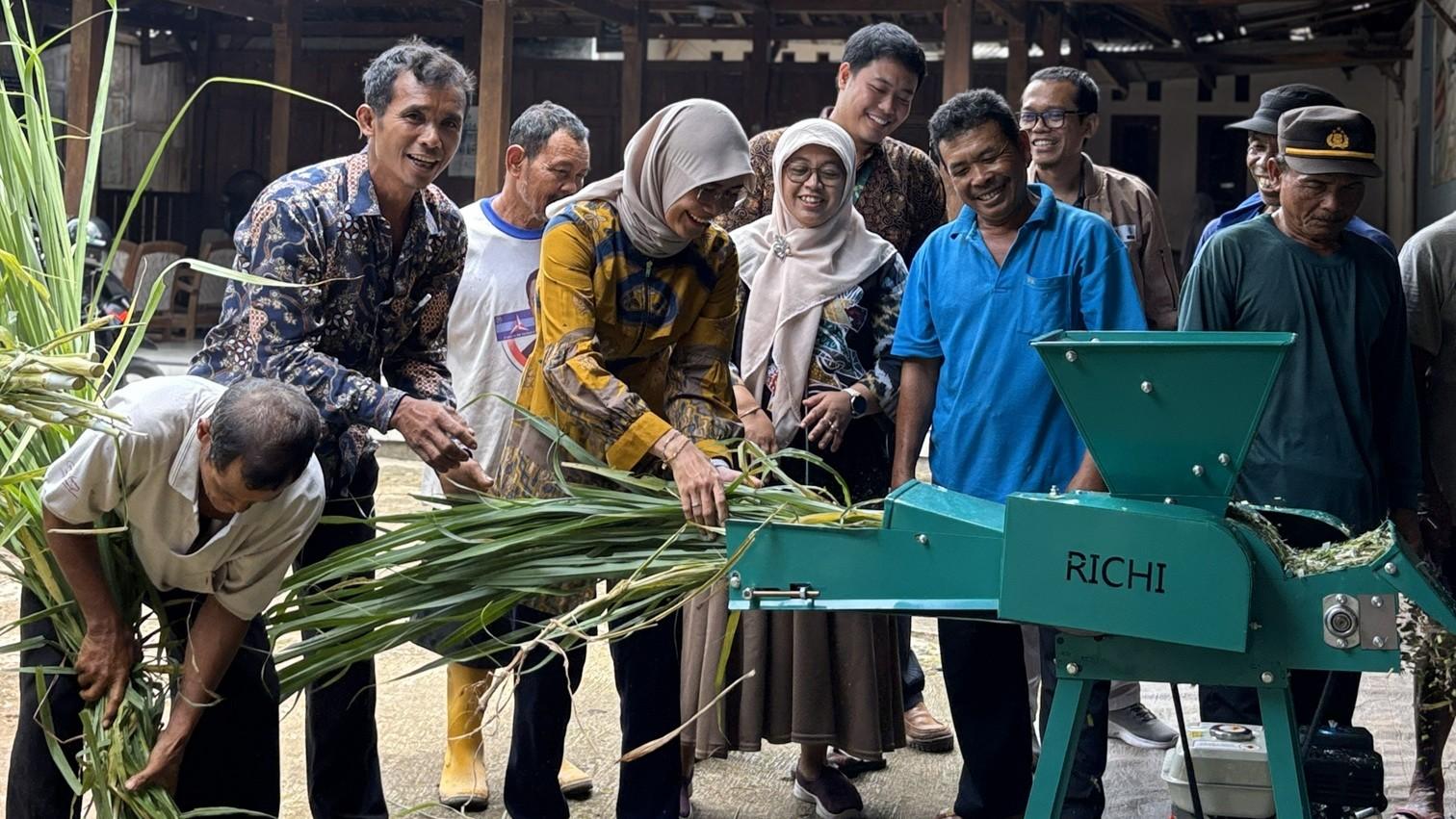
Yogyakarta, Indonesia – Parjiyo and Jumilah now have every reason to smile. Residents of Giripurwo Village, Purwosari District, Gunungkidul Regency, Special Region of Yogyakarta, they are relieved that the long-standing challenges affecting their community have finally begun to ease.
The two represent key sectors that sustain the village's economy. Parjiyo is a livestock farmer from the Mandiri Livestock Farmers Group, while Jumilah is a batik artisan from Natural Art.
For years, both the livestock and batik industries struggled to thrive.
"In the past, growing grass for livestock feed was extremely difficult," Parjiyo recalled. As a result, farmers had to purchase supplementary feed, significantly increasing production costs.
Jumilah explained that the village's creative economy also suffered from unreliable electricity. "Power outages from the state utility company happened frequently, making it difficult for us to produce batik," she said. Consequently, the batik business run by local women's groups gradually declined.
These challenges stem largely from Giripurwo's geographical conditions. Located at the southern tip of Yogyakarta Province, around 35 kilometers from Yogyakarta City, the village is dominated by limestone terrain. During the dry season, water scarcity becomes severe.
Agriculture and livestock farming—the primary sources of income for residents—often yield unsatisfactory results. As a consequence, Giripurwo has long been among the areas facing poverty and limited resources.
Yet despite its harsh landscape, the villagers never lost hope of changing their future. That hope grew stronger when academics from Universitas Nahdlatul Ulama Yogyakarta (UNU Jogja) introduced innovative solutions designed to address the village's interconnected challenges.
The initiatives were implemented through the 2025 Kolaborasi Sosial Membangun Masyarakat (Kosabangsa/Social Collaboration for Community Development) Program, a competitive grant funded by Indonesia's Ministry of Higher Education, Science, and Technology.
Through the program, UNU Yogyakarta lecturers—Zulfatun Ruscitasari, S.E., M.Acc. (Faculty of Economics), Irwan Novianto, S.T., M.Eng. (Faculty of Information Technology), Septian Rico Hernawan, S.Kom., M.Eng. (Faculty of Information Technology), and Marosimy Millaty, S.E., M.Sc. (Faculty of Halal Industry)—together with university students, worked directly with local communities to identify problems and develop practical solutions.
Using a participatory, applied, and sustainable approach that integrated research findings with real community needs, UNU Jogja, alongside mentoring partners from Universitas Gadjah Mada (UGM), introduced several innovations. These included cultivating high-quality forage grass for livestock and installing solar-powered water pumps. Powered by renewable energy technology, the system also supplies electricity to support batik production while being complemented by managerial assistance.
The innovations have brought tangible improvements. "Now we can control and monitor irrigation for our forage fields directly from home," said Parjiyo.
Likewise, local women involved in batik production have experienced the benefits of reliable renewable energy. "Thanks to the solar panels provided by UNU Jogja, we have free electricity. Producing batik has become much easier and faster," Jumilah said.
Developing Superior Livestock Feed
UNU Jogja began its efforts by mapping Giripurwo's geographical conditions and identifying its major challenges.
Covering approximately 2,725.7 hectares, the village consists mainly of steep limestone hills and lowlands formed from limestone deposits. The soil characteristics and rugged topography make agriculture and livestock farming particularly difficult.
Marosimy Millaty, a lecturer in Agribusiness at UNU Jogja and a member of the Kosabangsa team, explained that these conditions posed major obstacles to utilizing the village's agricultural and livestock potential.
"The village has 12 active farmer and livestock groups, demonstrating significant potential in agribusiness, particularly goat and cattle farming," she said.
However, limited natural vegetation and scarce water supplies have restricted access to quality livestock feed. Irrigation water has traditionally been sourced from underground caves that are difficult to access, while pumping infrastructure was virtually nonexistent.
In addition, local farmers had limited knowledge of modern feed production and management technologies.
"Most farmers still relied on traditional methods that were unable to preserve feed quality over the long term," she added.
As a result, farmers were forced to purchase feed from outside the village at prices ranging from IDR 2,500 to IDR 15,000 per bundle, increasing production costs and reducing profitability.
To address the problem, the UNU Jogja team introduced Gama Umami grass, a superior forage variety known for its higher nutritional value and stronger drought tolerance than conventional forage grasses.
The initiative covered the entire production chain—from cultivation and processing into livestock feed to feed stock management.
The results have been impressive. Local forage production has increased substantially, enabling farmers to meet more than 80–90 percent of their daily feed requirements, compared with only 40–50 percent previously.
The introduction of silage technology has also extended feed storage life to more than three months, significantly reducing dependence on purchased feed from outside the region. At the same time, farmers received training in modern feed management to improve livestock productivity.
Solar Energy Empowers Multiple Sectors
Where, then, does the water come from to irrigate these new forage fields?
Previously, Giripurwo's water distribution was constrained by its hilly terrain and the absence of pumping facilities capable of lifting and distributing water for irrigation.
The UNU Jogja team addressed this challenge by installing solar-powered water pumps integrated with Internet of Things (IoT) technology.
Irwan Novianto, a lecturer in Electrical Engineering, explained that the renewable energy system was specifically designed for areas with unstable electricity access. The pumped water now irrigates approximately half a hectare of forage fields that previously depended entirely on seasonal rainfall.
"Quantitatively, the solar-powered pumping system provides a stable water supply while reducing irrigation operating costs by more than 80 percent compared to fossil fuel-powered pumps," he explained.
Beyond agriculture, renewable energy has also strengthened the village's creative economy.
Solar panels were installed at the Natural Art batik production center, providing electricity for heating batik wax and drying fabric—two stages of production that had frequently been disrupted by power outages.
Septian Rico Hernawan, a lecturer in Computer Engineering, noted that combining renewable energy with IoT technology significantly boosted batik productivity.
"Following the installation of the solar panels, production has become much more stable, increasing weekly output from an average of 5–10 pieces to 10–15 batik fabrics," he said.
Helping Batik Artisans Become More Professional
The Kosabangsa team also identified management challenges within the women's batik enterprise.
Financial records were poorly maintained, while marketing activities remained limited. As a result, Giripurwo's distinctive batik products—including shibori and stamped batik—struggled to compete in broader markets.
Business finances were also mixed with household expenses, making it difficult to assess profitability, prepare budgets, or plan long-term business growth.
To address these issues, UNU Jogja provided training in financial management and digital marketing.
The program strengthened participants' capacity to manage their businesses more professionally while expanding product promotion through social media and e-commerce platforms such as WhatsApp, Instagram, and Shopee.
Through these integrated innovations, the Kosabangsa Program has generated significant social, economic, and environmental impacts for Giripurwo Village.
Ensuring Sustainable Community Engagement
Dr. Suhadi, Vice Rector for Academic Affairs, Research, and Community Service at UNU Jogja and the program's principal investigator, said the initiative had successfully enhanced local capacity in multiple areas—from cultivating superior forage grass and adopting solar energy technology to improving financial management and digital marketing for batik enterprises.
"The success of the program was supported by intensive mentoring, practical equipment, comprehensive learning modules, and strong coordination among the technical team, instructors, and participants. Careful planning and continuous assistance enabled the program to run effectively," he said.
The program's achievements have also received international recognition.
UNU Jogja's Kosabangsa Program ranked 74th globally in the Interdisciplinary, Convergent, and Integrated Research category of the World University Rankings for Innovation (WURI) 2026. It was one of 11 UNU Jogja programs placed in the global Top 100, contributing to the university's overall ranking of 303rd among the world's most innovative universities.
However, UNU Jogja's commitment to Giripurwo extends well beyond the completion of the 2025 Kosabangsa Program.
Zulfatun Ruscitasari, head of the Kosabangsa team, said the university has developed a long-term sustainability strategy for community engagement in the village.
The strategy includes expanding the forage feed market beyond the local area to increase village-generated income while helping stabilize feed prices for local livestock farmers.
"This initiative will be reinforced through the establishment of the UNU Jogja Social Laboratory in Giripurwo, which will institutionalize post-Kosabangsa programs while serving as a platform for continued research and sustainable community engagement," Zulfatun explained.
Several promising development opportunities are also being explored, including agro-ecotourism based on the Kosabangsa program, commercial production of Gama Umami silage, premium eco-print batik made from local vegetation supported by digital marketing research, and further innovation initiatives led by UNU Jogja.
The village's solar-powered water management system also has the potential to serve as a model for addressing drought in Indonesia's disadvantaged, frontier, and outermost (3T) regions.
Through these innovations, UNU Jogja's research and community service have improved the lives not only of Parjiyo, Jumilah, and the people of Giripurwo, but also offer a scalable model capable of benefiting communities far beyond the village itself. [Arif]
Share
Related News
Working from Anywhere, But Not Always Connected: The Spirituality Crisis of Work in the Teleworking Era
Published by Latifatussolikhah, 22 Jun, 2026 | Duration. 4 Minutes
%20Banner%20WURI%202026%20-%201-1781073748960.png?alt=media&token=223ef724-ea58-4b6c-8629-e8ed609a29c0)
UNU Jogja Ranks 303rd Globally, Enters Top 100 Across 11 Innovative Programs in The World University Rankings for Innovation (WURI) 2026
Published by Intan Agisti Nila Sari, 10 Jun, 2026 | Duration. 5 Minutes
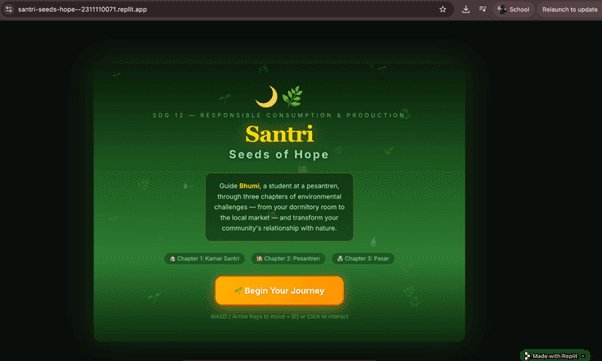
Get to Know RPG Santri: Seeds of Hope, a Global Technology Innovation by the UNU Jogja Team
Published by Latifatussolikhah, 28 Apr, 2026 | Duration. 3 Minutes
Popular News
Strict Selection of 1,081 Participants: PGSD Student of UNU Jogja Selected for GerakDampak Academy 2026 by Indika Foundation and Highlights Student Mental Health Issues
Published by Latifatussolikhah, 24 Jun, 2026 | Duration. 2 Minutes
UNU Jogja PBI Students Achieve Two National Awards at NEC 2026, Highlight AI Ethics and Environmental Impact
Published by Latifatussolikhah, 23 Jun, 2026 | Duration. 3 Minutes
UNU Jogja Pharmacy Student Wins Runner-Up II and Best Favorite at Duta Kesehatan DIY 2026, Advocates for Environmental Sanitation
Published by Latifatussolikhah, 17 Jun, 2026 | Duration. 4 Minutes
UNU Jogja Pharmacy Alumnus Builds Career at the Central Java Regional Health Crisis Center of Indonesia’s Ministry of Health
Published by Latifatussolikhah, 12 Jun, 2026 | Duration. 2 Minutes