
UNU Jogja Integrates Decarbonomics into Learning with IGCN to Support Low-Carbon Economy Education
Published by Latifatussolikhah, 26 Nov, 2026
Est. 4 Minutes
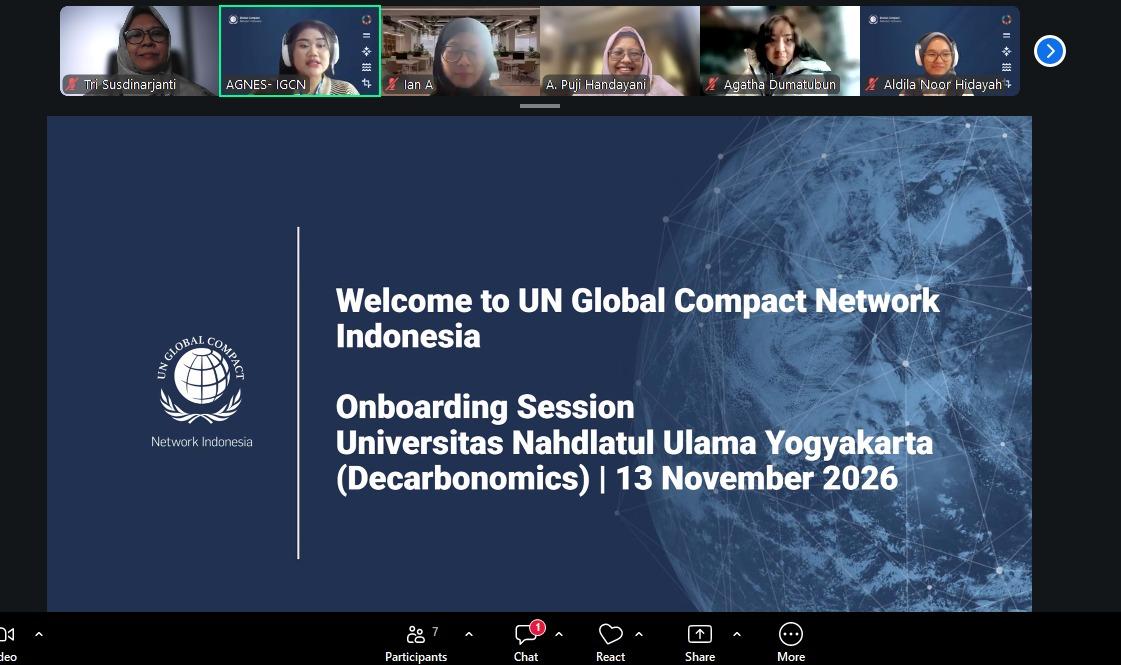
Yogyakarta, Indonesia – Reducing carbon emissions is one of Universitas Nahdlatul Ulama Yogyakarta’s (UNU Jogja) priorities in supporting sustainable development. Through a decarbonization approach, UNU Jogja has begun integrating the issue into its learning process, engaging both lecturers and students.
UNU Jogja, through its Informatics and Accounting Study Programs, has started implementing decarbonization-related materials in its learning activities. This educational development is supported by the UN Global Compact Network Indonesia (IGCN), particularly in strengthening the academic community’s understanding of sustainability and carbon emission reduction efforts.
During an onboarding session, IGCN Academy Program Team member Aldila Noor Hidayah explained that IGCN offers various educational programs to support capacity building and collaboration with universities. These programs include workshops, seminars, training sessions, and customized in-house training.
“We regularly organize activities such as workshops, seminars, training sessions, and customized in-house training. All of these are part of IGCN Academy,” Aldila said on Friday, November 13.
According to her, these programs provide opportunities for UNU Jogja to engage in collaborations that promote responsible practices and support the achievement of the Sustainable Development Goals (SDGs).
During the session, Aldila also introduced the Ten Principles of the UN Global Compact, various IGCN programs and initiatives, as well as opportunities for engagement and collaboration. The session provided UNU Jogja with a platform to understand the role of higher education institutions in promoting responsible practices and advancing the SDGs.
“Through this initiative, IGCN hopes to build meaningful collaboration with UNU Jogja while supporting the institution’s journey toward a more sustainable future,” Aldila said.
Ian Agisti Dewi Rani, Vice Rector for Cooperation, Business, and Creative Funding at UNU Jogja, welcomed the collaboration. She said the partnership offers an opportunity for UNU Jogja’s academic community to access various learning materials related to the SDGs, particularly carbon emissions.
She explained that several study programs at UNU Jogja have already integrated sustainability approaches into their curricula. Therefore, she hopes the collaboration will broaden understanding of sustainability issues and generate a multiplier effect across the university’s academic community.
“This collaboration is an opportunity for UNU Jogja’s academic community to deepen its understanding of the SDGs, particularly carbon emissions. We hope the available materials can be utilized effectively and encourage the application of sustainability principles throughout the campus,” she said.
Informatics as a Digital Enabler for the Low-Carbon Economy Transition
Dr. Yana Hedriana, Head of UNU Jogja’s Informatics Study Program, explained that the program’s primary contribution to decarbonization lies in its role as a digital enabler. According to her, informatics goes beyond software development to build data infrastructure, artificial intelligence models, sensor systems, reporting platforms, data security mechanisms, and optimization solutions that support the transition to a low-carbon economy.
She further noted that digital technologies such as the Internet of Things (IoT), artificial intelligence and machine learning (AI/ML), cloud computing, big data, blockchain, and digital twins have been widely explored as tools for supporting real-time carbon accounting, supply chain transparency, energy efficiency, and data-driven decision-making.
According to Yana, the Informatics Study Program has a relevant academic foundation to support decarbonization, particularly through software engineering, data science, artificial intelligence, distributed systems, computer networks, information security, and human-computer interaction.
Currently, decarbonization topics are being introduced to students through assignments, field practices, and discussions. Although the materials have not yet been specifically integrated into a dedicated course, this initiative marks an initial step for the Informatics Study Program in building students’ understanding of the decarbonized economy and sustainability issues.
Accounting Promotes Business Transparency through ESG Financial Reporting Education
Similarly, Anik Puji Handayani, a lecturer in UNU Jogja’s Accounting Study Program, explained that sustainability and decarbonization issues have been introduced through an elective course she has taught since 2023.
In 2026, the Accounting Study Program also incorporated Financial Reporting ESG into its curriculum as a compulsory course for students of the 2024 cohort.
She explained that Financial Reporting ESG focuses on integrating Environmental, Social, and Governance (ESG) aspects into corporate financial and sustainability reporting frameworks.
According to her, amid global market demands, increasingly stringent regulations, and growing investor expectations for transparency regarding sustainability impacts, the course is essential in equipping students with analytical and non-financial reporting competencies that directly affect business valuation and risk.
She further explained that throughout the semester, students will study various topics, including global reporting frameworks, the concept of double materiality, carbon measurement and accounting, disclosures on social capital and governance, and ESG assurance techniques to assess report integrity and prevent greenwashing.
Through this process, students will not only learn ESG reporting frameworks and concepts but also engage in corporate case studies, sustainability report analysis, and the preparation of ESG report drafts based on established frameworks through interactive learning. []
Reporter: Latifah
Share
Related News
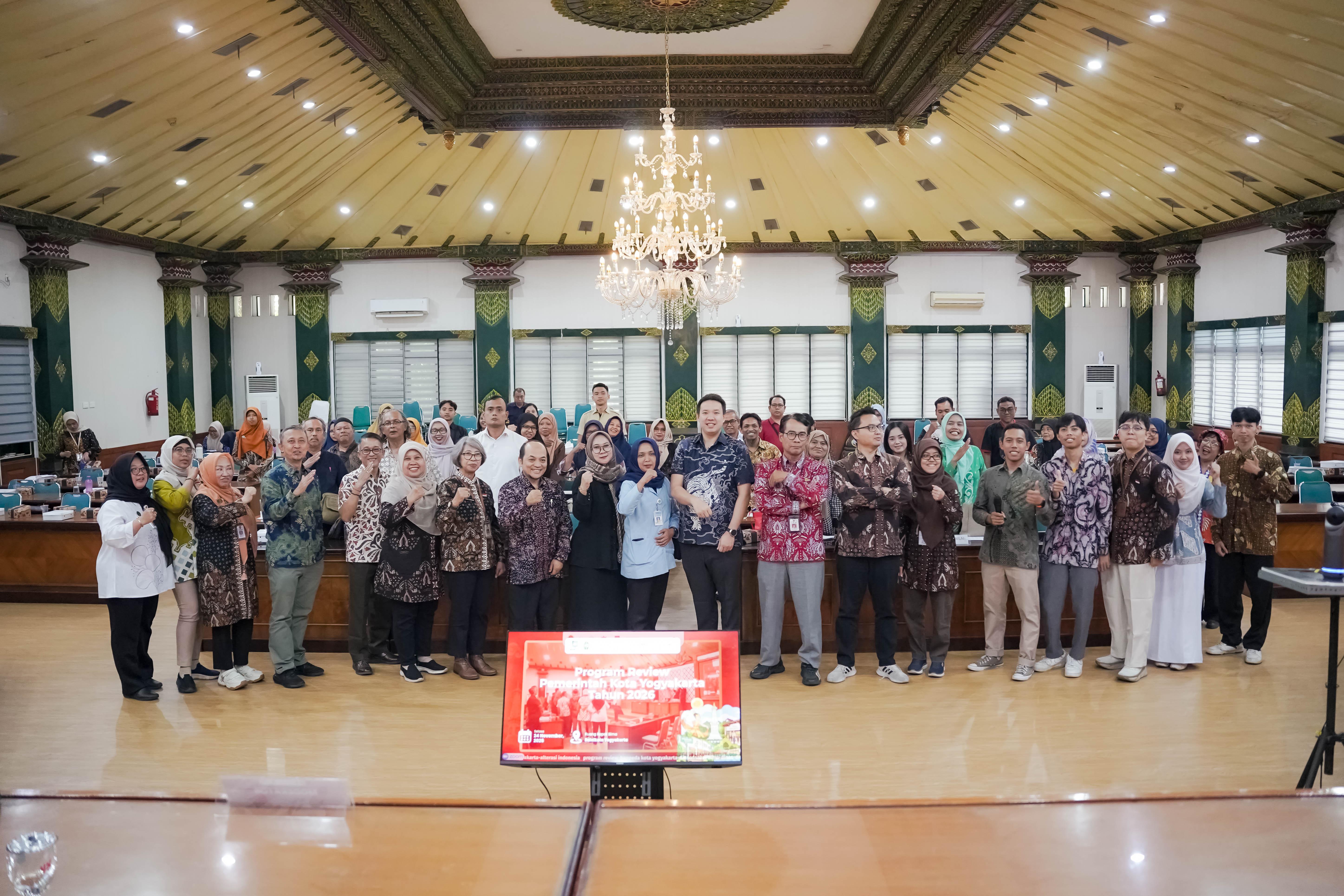
UNU Jogja Promotes Innovation in Yogyakarta City’s Development Evaluation
Published by Latifatussolikhah, 26 Nov, 2026 | Duration. 4 Minutes
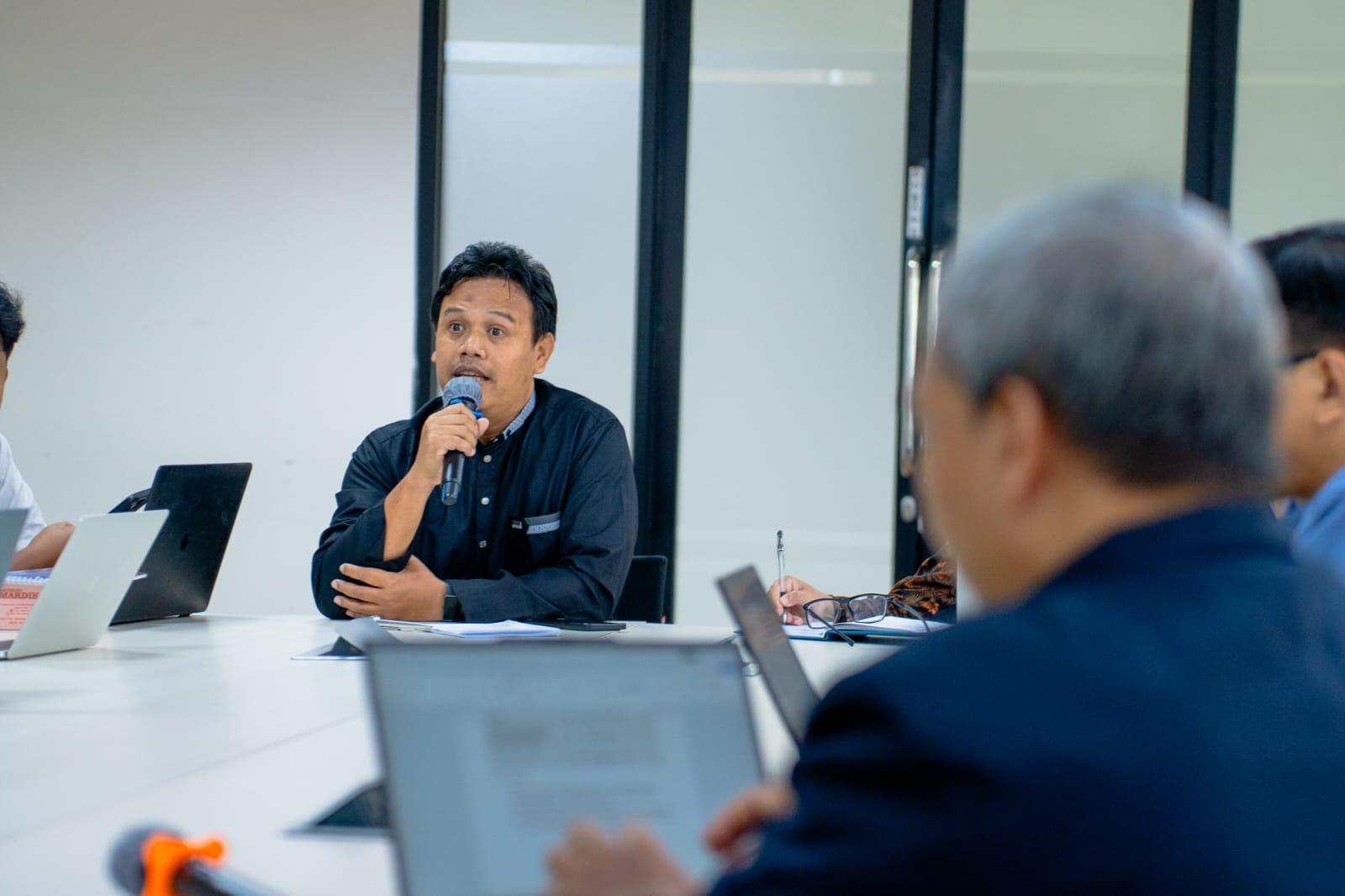
UNU Jogja Disability Services Unit Head Discusses Universal Design for Learning at National Education Policy Dialogue
Published by Latifatussolikhah, 24 Nov, 2026 | Duration. 5 Minutes
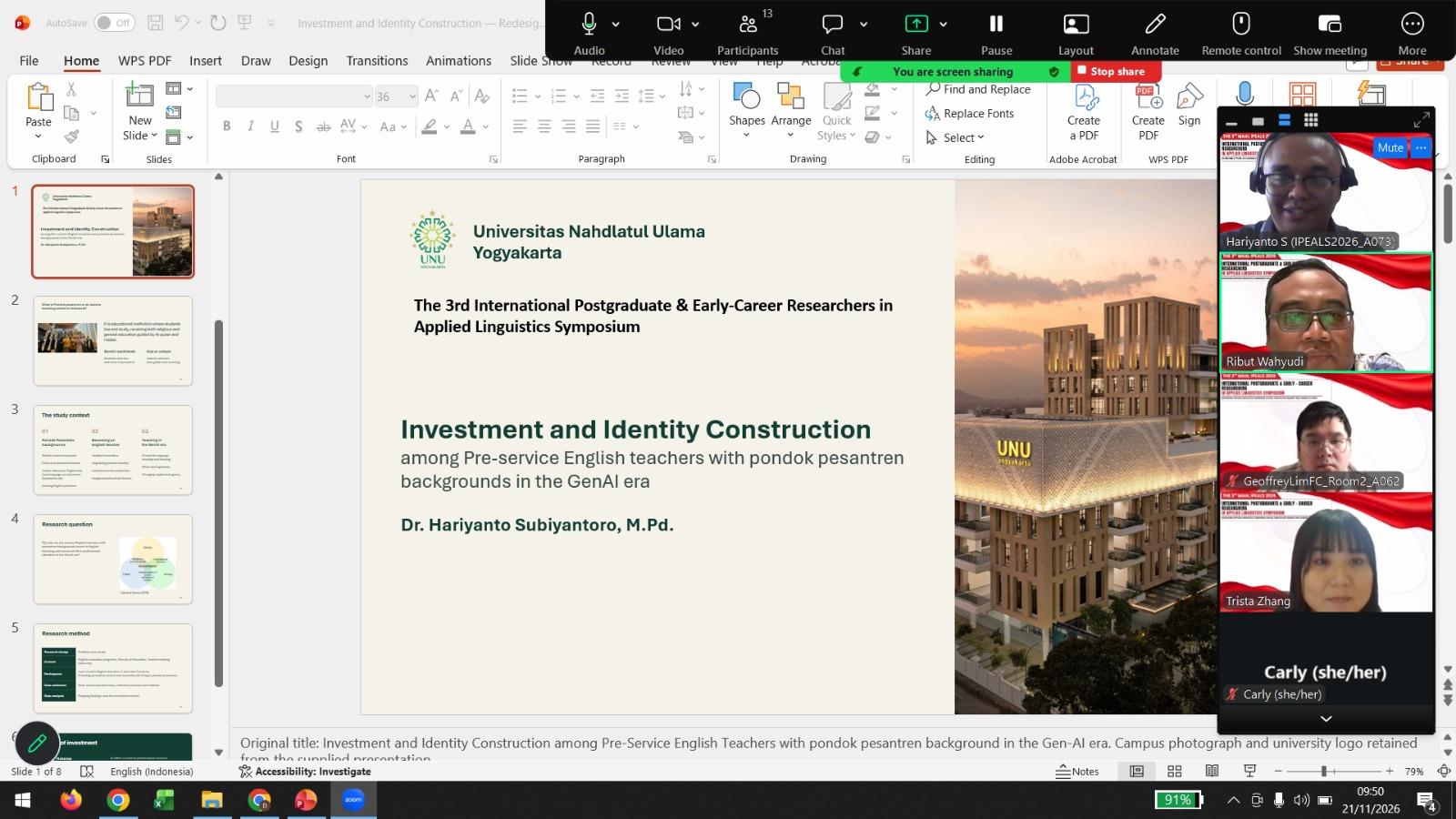
English Education Lecturer UNU Jogja Presents Research at IPEALS 2026 International Symposium organized by the Malaysia Association of Applied Linguistics
Published by Latifatussolikhah, 24 Nov, 2026 | Duration. 4 Minutes