UNU Jogja’s Faculty of Islamic Studies Strengthens Religious Moderation among 40 Senior High School Teachers in Yogyakarta through National Seminar
Published by Latifatussolikhah, 23 Nov, 2026
Est. 7 Minutes
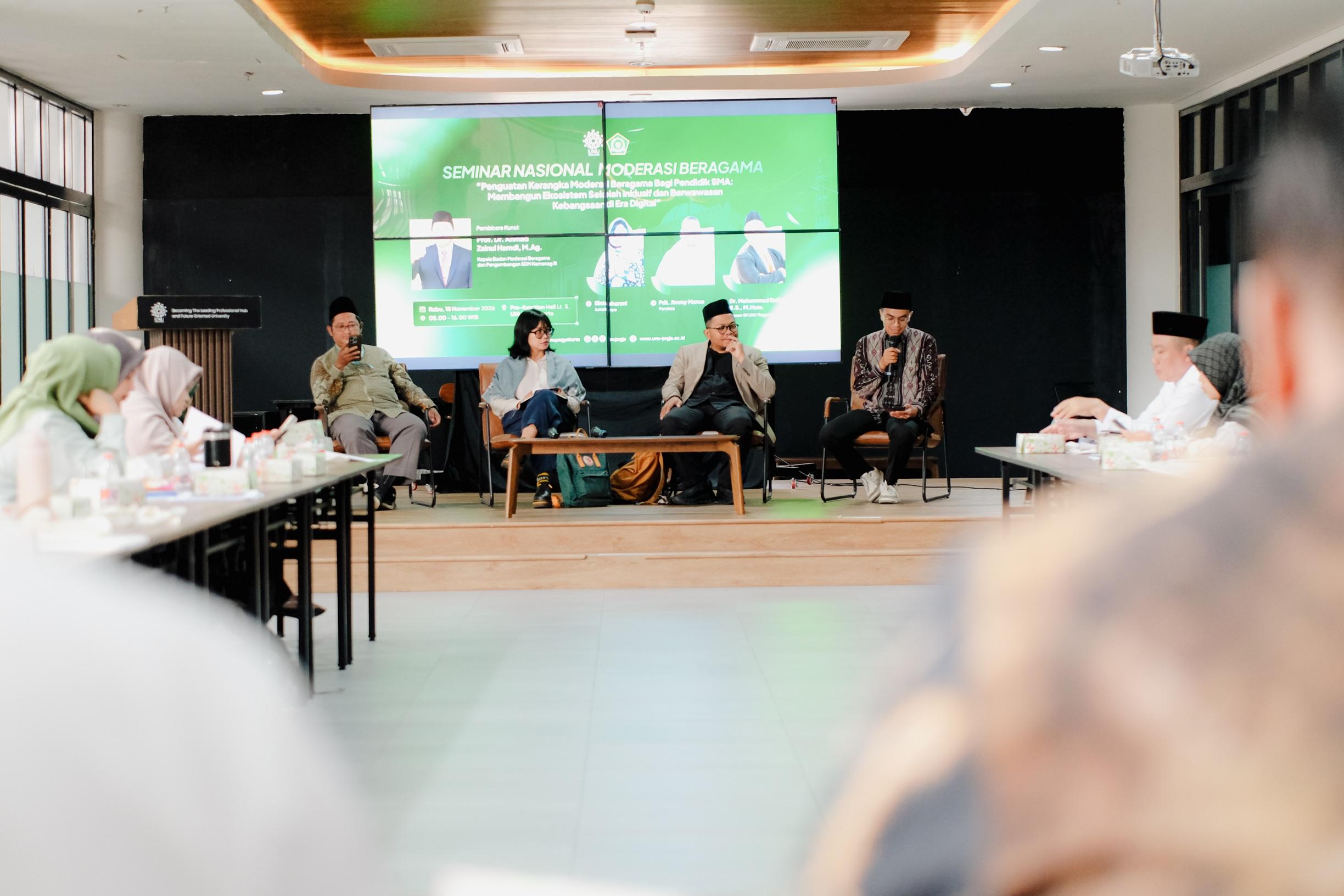
Yogyakarta, Indonesia – The Faculty of Islamic Studies (FDI) at Universitas Nahdlatul Ulama Yogyakarta (UNU Jogja), in collaboration with the Agency for Religious Moderation and Human Resource Development of the Ministry of Religious Affairs of the Republic of Indonesia, held a National Seminar on Religious Moderation entitled “Strengthening the Framework of Religious Moderation for Senior High School Educators: Building an Inclusive and Nationally Conscious School Ecosystem in the Digital Era.” The event took place at the Pre-function Hall, 5th Floor, UNU Jogja Campus, on Wednesday, November 18.
The seminar brought together 40 senior high school and equivalent-level teachers from various parts of the Special Region of Yogyakarta (DIY). The event featured Prof. Dr. Ahmad Zainul Hamdi, M.Ag., Head of the Agency for Religious Moderation and Human Resource Development of the Ministry of Religious Affairs of the Republic of Indonesia, as the keynote speaker. Three other speakers also participated: Shinta Maharani, journalist at Tempo; Rev. Jimmy Marco; and Dr. Mohammad Rofiqi, S.S., M.Hum., a lecturer at FDI UNU Jogja and an observer of peace-related issues.
UNU Jogja Rector, Dr. Fahmy Akbar Idries, stated that teachers play a strategic role in instilling the values of religious moderation. According to him, educators are responsible not only for imparting knowledge but also for shaping students’ character through role modelling, mutual respect, and the ability to respond to differences constructively.
“Schools are important spaces for fostering mutual respect. Therefore, teachers need to serve as role models in responding to differences, encouraging dialogue, and instilling the value of justice in their students. In this way, religious moderation goes beyond theoretical knowledge and becomes something that can be practised in everyday life,” he said.
In line with this, Dean of FDI UNU Jogja, Hamdi Putra Ahmad, S.Ag., M.Phil., explained that the seminar was part of the faculty’s contribution to broadening the understanding of religious moderation in educational settings. Strengthening teachers’ capacities is essential to fostering a school culture that embraces tolerance, openness, and respect for diversity.
“Through this initiative, we aim to encourage educators to develop a more comprehensive understanding of religious moderation and apply its principles in the educational process. Teachers have a significant opportunity to create learning environments that are safe, open, and respectful of differences,” he said.
During the seminar, religious moderation was explored through three complementary perspectives: the interpretation of religious texts and linguistic approaches, the role of young people in promoting peace, and media literacy in addressing issues of diversity in the digital era.
Hamdi added that these three perspectives are essential in equipping teachers to address the dynamics of religious diversity in schools and society. The rapid development of information technology has made it easier for students to access various forms of information, including content that may foster prejudice and intensify divisions.
“Strengthening religious moderation requires the ability to understand religious teachings accurately, foster a culture of peace, and critically assess information. We hope teachers will bring these perspectives into their schools, making education a space that encourages dialogue and strengthens unity,” he concluded.
Religious Moderation Begins with Understanding Qur'anic Word Choices
In his presentation entitled “From Word Choice to Meaning: Exploring the Values of Religious Moderation in the Qur'an and Their Application in Schools,” Dr. Mohammad Rofiqi invited educators to understand religious moderation through a linguistic approach, particularly by examining word choices in the Qur'an.
Rofiqi emphasised that religious moderation does not seek to alter or standardise religious teachings. Rather, it concerns the perspectives, attitudes, and practices of religious adherents when interacting with others.
Through semantic and contextual approaches, he discussed six important Qur'anic terms that embody the values of religious moderation: wasathan (justice and balance), i'dilū (act justly), lita'ārafū (get to know one another), lā ikrāha (no compulsion), lā tasubbū (do not insult), and bil-ḥikmah (with wisdom).
“Each of these terms carries ethical implications for social life, including educational practices in schools,” he explained.
He further explained that the word wasathan, as stated in Surah Al-Baqarah, verse 143, embodies the principles of justice and balance. In education, this value can be implemented through teachers’ commitment to providing fair treatment, assessment, and opportunities for all students, regardless of their religious backgrounds.
Meanwhile, the concept of lita'ārafū in Surah Al-Hujurat, verse 13, emphasises that diversity should serve as an opportunity for mutual understanding rather than a basis for prejudice and hostility.
Rofiqi also highlighted the importance of using respectful language in school environments. The prohibition against insulting the beliefs of others, as stated in Surah Al-An'am, verse 108, provides an ethical foundation for preventing bullying, stereotyping, and hate speech, including on social media.
“Through this approach, we encourage teachers to translate the values of religious moderation from textual understanding into concrete actions, whether through communication, social relationships, or school policies,” he concluded.
Young People Must Become Agents of Peace in the Digital Era
A different perspective was presented by Rev. Jimmy Marco, who discussed the role of young people as agents of peace in building an inclusive and nationally conscious school ecosystem.
He highlighted the challenges posed by digital technology, which has transformed the way young people interact socially. According to him, social media is not merely a platform for communication and information exchange but can also become a space for spreading intolerance, identity-based polarisation, cyberbullying, and hate speech.
Referring to data from the Indonesian Internet Service Providers Association (APJII), which indicates high internet penetration among Generation Z, Jimmy emphasised the importance of equipping students with digital literacy and the values of religious moderation.
He also outlined four indicators of religious moderation: national commitment, tolerance, non-violence, and accommodation of local culture.
“These four indicators need to be developed not only in everyday school life but also in interactions within digital spaces,” he said.
He expressed his hope that young people would take on active roles as fact-checkers to prevent the spread of misinformation, bridges for interfaith dialogue, guardians of safe spaces against bullying, and content creators who promote national values and local wisdom.
In the educational context, Jimmy also encouraged the integration of religious moderation and digital literacy into various school subjects. In addition, he proposed establishing peace ambassadors within schools, strengthening anti-bullying policies, and organising collaborative activities that bring together students from diverse religious and cultural backgrounds.
“This means students should no longer be positioned merely as recipients of religious moderation education, but also as active participants in promoting peace and togetherness,” he concluded.
Media Literacy Is Essential to Prevent Intolerance
Meanwhile, Shinta Maharani, journalist at Tempo, discussed the role of mass media in shaping public perceptions of diversity through her presentation entitled “How Mass Media Reports on Issues of Diversity.”
Shinta encouraged participants to understand that media coverage does not always provide a completely neutral reflection of reality. The selection of perspectives, sources, headlines, and wording in news reports can influence how the public interprets an event.
She highlighted the practice of clickbait, or the use of sensational headlines, which can potentially provoke emotions, prejudice, and hostility towards certain groups.
Through several examples of news coverage concerning religious freedom issues in Yogyakarta, Shinta explained how news framing can influence public understanding of cases of intolerance.
In the educational context, she emphasised that teachers play an important role in developing students’ critical thinking skills when accessing information, particularly on issues related to religion and diversity.
She also proposed several practical approaches to teaching media literacy, including comparing reports from different media outlets, examining word choices in headlines, verifying the credibility of sources, and distinguishing between facts and opinions.
“Through strong media literacy, I hope schools can develop students who are not easily provoked by sensational information and are better equipped to respond to differences with wisdom,” she concluded. []
Contributor: Dr. M. Rofiqi
Editor: Latifah
Share
Related News
UNU Jogja Lecturer Explores the Historical Footprints of Wali Songo in Kelantan, Malaysia, at AICIS 2026 International Conference
Published by Latifatussolikhah, 23 Nov, 2026 | Duration. 6 Minutes
Developing a Seedling Nursery and Agroforestry: UNU Jogja and IPB University Optimize NU Waqf Land
Published by Latifatussolikhah, 16 Nov, 2026 | Duration. 5 Minutes
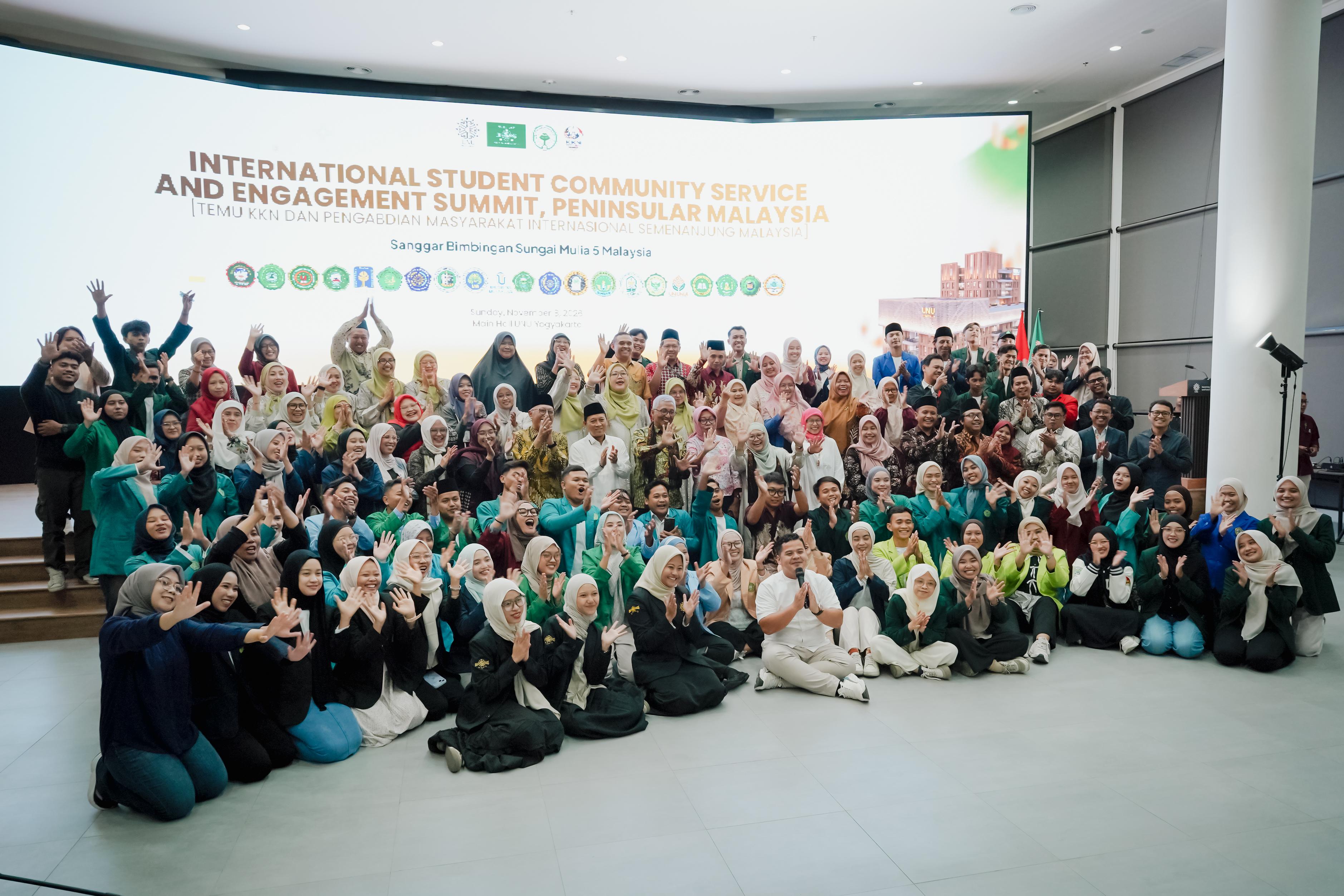
UNU Yogyakarta and 21 Universities Strengthen Education for Migrant Workers’ Children in Malaysia
Published by Latifatussolikhah, 10 Nov, 2026 | Duration. 9 Minutes
Popular News
UNU Jogja Pharmacy Students Win First Honorable Mention Nationally with Digital Technology and Gotu Kola Innovation for TB Control
Published by Latifatussolikhah, 19 Nov, 2026 | Duration. 3 Minutes
Arifin Kurnia Setiatama, Islamic Interdisciplinary Studies Student at UNU Jogja, Wins Second Honorable Mention in the 2026 Kulon Progo Youth Potential Selection
Published by Latifatussolikhah, 18 Nov, 2026 | Duration. 4 Minutes
UNU Jogja Pharmacy Students Win Honorable Mention at International Coophar 2026 Poster Competition
Published by Latifatussolikhah, 13 Nov, 2026 | Duration. 3 Minutes
Two Pharmacy Students of UNU Jogja Win Second Runner-Up Honorable Mention at the National Pharmacist Education Competition
Published by Latifatussolikhah, 16 Nov, 2026 | Duration. 2 Minutes