
Good UNU Governance (GUNUG): Building Shared Awareness and a Culture of Quality
Published by Latifatussolikhah, 2 Nov, 2026
Est. 10 Minutes
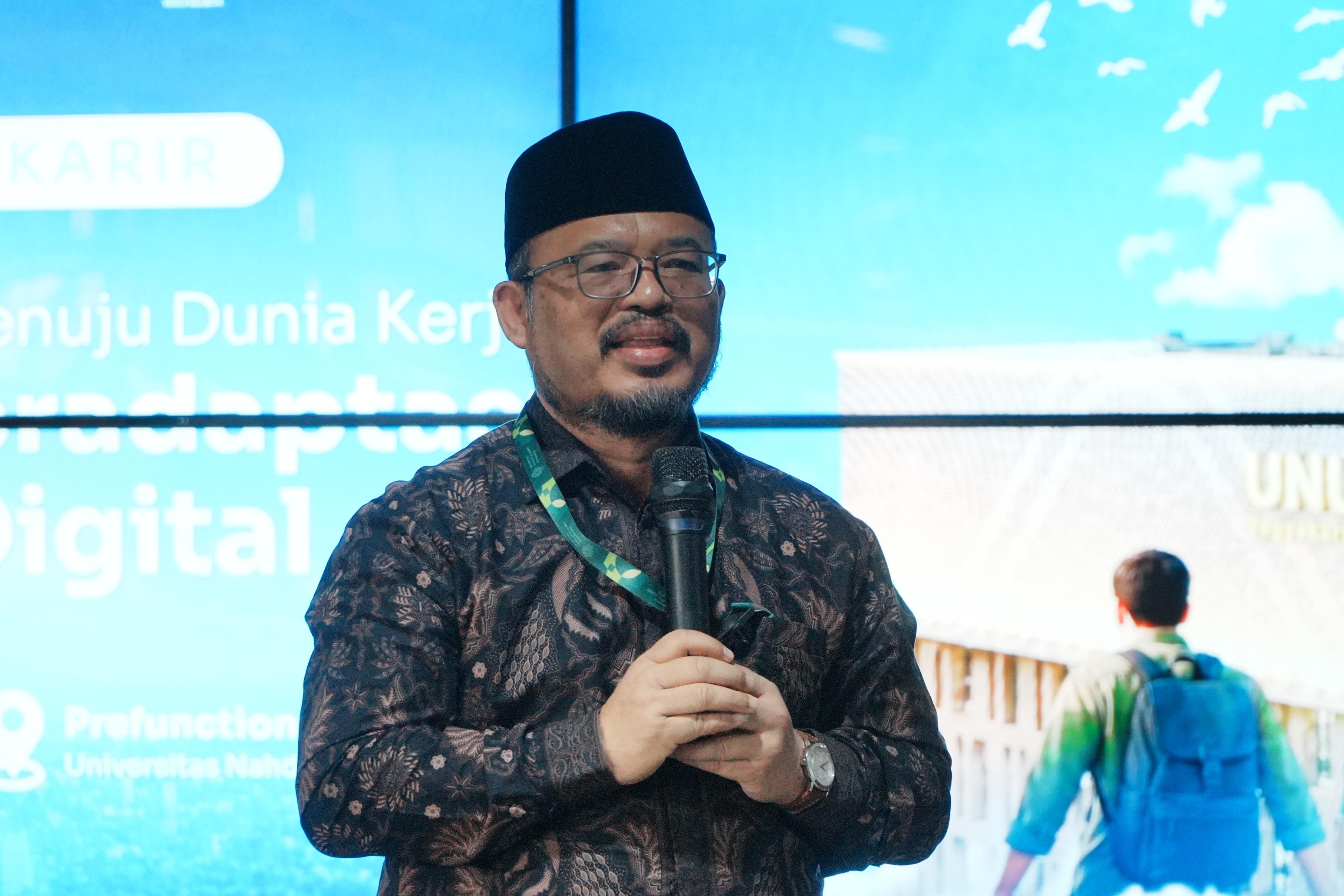
By: Dr. Abdul Ghoffar, M.B.A.
[OPINION] One of the missions of Universitas Nahdlatul Ulama Yogyakarta (UNU Yogyakarta) that must be continuously pursued in order to realize its vision of becoming a leading university with global competitiveness is to establish professional university governance based on the principles of Good University Governance (GUG).
This mission should not be understood merely as an institutional requirement or a matter of fulfilling formal documentation. More importantly, good governance must become a shared awareness that shapes the way we think, influences the way we act, and guides every decision made by all parties involved in the management and operation of UNU Yogyakarta.
In this context, we can refer to this approach as Good UNU Governance (GUNUG), an effort to establish good governance at UNU by making the principles of GUG both a guiding framework and a shared institutional culture.
Fundamentally, GUG is a system and set of principles for managing higher education institutions that uphold transparency, accountability, responsibility, independence, fairness, and inclusiveness. These six principles have been incorporated into UNU Yogyakarta's Strategic Plan. This means that we already have a clear direction and framework. The challenge lies in translating these principles from strategic statements into shared awareness, and from awareness into concrete behaviors in our everyday campus life.
There are six principles that we need to continuously understand and put into practice together.
First, transparency.
Transparency refers to openness in governance. Every policy, regulation, decision-making process, and resource management practice, particularly financial management, should be explainable and accessible, in an appropriate manner, to relevant stakeholders. Openness is not merely about sharing information; it is also about building trust.
We need to recognize that trust does not grow simply because an individual or institution asks to be trusted. Trust develops when adequate information is available, explanations are provided honestly, and there is a willingness to make relevant processes transparent to those who have a legitimate interest in understanding them. Therefore, transparency should become a habit rather than merely an obligation fulfilled when requested or during an audit.
Second, accountability.
Accountability refers to the willingness and obligation to take responsibility for every mandate entrusted to us. In university governance, institutional leaders and all members of the university community must be able to account for policies, budget utilization, resource management, and the implementation of the Three Pillars of Higher Education (Tridharma Perguruan Tinggi) to stakeholders, including students, lecturers, administrative staff, parents, alumni, and the wider community.
We need to regard the positions, authority, and resources entrusted to us on campus as responsibilities that must be accounted for. Such accountability should not be limited to administrative reports but should also be reflected in work outcomes, service quality, and the benefits experienced by society.
To support accountability, UNU has established various institutional instruments, including its Statute, regulatory frameworks, Internal Quality Assurance System (SPMI), Strategic Plan (Renstra), Annual Work Plan and Budget (RKAT), as well as performance and annual reports. However, these instruments will only have real value when they are genuinely used as references in carrying out responsibilities and making decisions.
Third, responsibility.
Responsibility means the willingness to fulfill obligations in accordance with applicable laws and regulations, institutional policies, and the values that underpin the operation of a higher education institution. Responsibility also has moral and social dimensions, because a university does not exist for its own sake. Rather, it exists to advance knowledge, develop human potential, and contribute meaningfully to society.
In the context of UNU Yogyakarta, this responsibility is reflected, among other things, in the earnest implementation of the Three Pillars of Higher Education. Education must be delivered effectively, research must be developed with a commitment to quality, and community service must generate tangible benefits.
We need to ask ourselves: Have the responsibilities we have carried out so far genuinely fulfilled the trust placed in us? Has our work created added value for the institution and society? Such questions are important to ensure that responsibility does not stop at completing assigned tasks but also involves a genuine commitment to producing meaningful outcomes.
Fourth, independence.
Independence refers to an institution's ability to manage its governance autonomously, professionally, and on the basis of justifiable considerations. In the academic sphere, independence is closely associated with academic freedom and intellectual autonomy. In non-academic affairs, independence requires institutional decisions to be made based on regulations, institutional interests, and objective considerations, rather than inappropriate pressure or conflicting interests.
Independence does not mean that a university operates without coordination, supervision, or compliance with regulations. Rather, independence must go hand in hand with accountability and adherence to applicable rules. We need autonomy to make decisions professionally, but we also need oversight mechanisms to ensure that such autonomy remains within the boundaries of responsibility.
Therefore, independence should be understood as the ability to maintain integrity in institutional management and decision-making, even when various interests need to be taken into consideration.
Fifth, fairness.
Fairness is a principle that requires every party to receive reasonable, equal, and proportionate treatment in accordance with their respective rights, obligations, competencies, contributions, and applicable regulations. This principle encompasses all stakeholders, including lecturers, students, administrative staff, alumni, and the wider community.
Fairness does not always mean providing everyone with exactly the same things or resources. Rather, it means allocating them appropriately according to each individual's rights and responsibilities. Therefore, every policy should be formulated based on clear criteria, implemented consistently, and supported by transparent and justifiable considerations.
In campus life, the principle of fairness also requires us to avoid preferential treatment that cannot be objectively justified. We must foster an environment in which everyone has the opportunity to grow and develop based on their competencies, performance, integrity, and fair access to opportunities.
Fairness is an essential foundation for developing a sense of belonging to the institution. When members of the university community feel that they are treated fairly, trust grows and their commitment to advancing the institution becomes stronger.
Sixth, inclusiveness.
Inclusiveness means developing systems, policies, and a campus environment that provide equal access and opportunities for all members of the university community, including persons with disabilities and groups vulnerable to barriers or discrimination.
An inclusive campus is not merely one that opens its doors to many people. It is a campus that ensures everyone has the opportunity to participate, develop, and contribute. We need to create an environment that respects differences, listens to diverse perspectives, and ensures that no one is marginalized because of their circumstances or background.
From this perspective, inclusiveness is not simply a service policy but also an attitude and a shared culture. We need to learn to respect others, make room for differences, and recognize that institutional progress can flourish when everyone is given the opportunity to develop their potential.
These six principles are certainly not easy to put into practice. Including them in the Strategic Plan, translating them into regulations, or incorporating them into institutional documents are important steps, but they are not enough. The real challenge is how to make these principles a mindset and a set of behaviors that are reflected in the everyday lives of everyone at UNU Yogyakarta.
Good governance is determined not only by the completeness of its systems but also by the people who implement them. A good system requires people who are committed to working responsibly and ethically. Conversely, the dedication of individuals also requires a clear system to ensure that every entrusted responsibility is carried out in a structured, measurable, and accountable manner.
Therefore, we should not set systems against awareness or regulations against workplace culture. Both must reinforce one another. Regulations provide guidance, systems establish mechanisms, while awareness and integrity ensure that everything is genuinely put into practice. This is where the importance of building a shared culture of quality comes into focus.
UNU Yogyakarta has developed an Internal Quality Assurance System (SPMI) as one of the instruments to ensure that university operations are conducted in accordance with established standards. Through SPMI, various aspects of higher education, including education, research, community service, and governance, are expected to have clear standards, evaluation mechanisms, and follow-up improvement measures.
At the same time, efforts to obtain and maintain good accreditation are part of the External Quality Assurance System (SPME), which enables institutional quality to be assessed against applicable standards and criteria.
However, we must continually remember that SPMI is not an end in itself. Similarly, accreditation is not the ultimate goal of all our quality improvement efforts. Both are instruments to ensure that we continue moving toward better outcomes. We must not become so preoccupied with preparing quality assurance documents that we forget to improve the actual quality of our work. Nor should we be satisfied with meeting standards on paper while failing to deliver quality services in practice.
This is where we need to cultivate an awareness of continuous improvement, a commitment to ongoing progress. Quality is not a condition that can be achieved once and then considered complete. Quality is a process that must be continuously maintained, evaluated, and improved. What is already good today must be sustained; what is not yet good must be improved; and what still has room for development must continue to be pursued.
In this spirit, we can draw lessons from a widely circulated message attributed to Prophet Muhammad (peace be upon him) about the importance of becoming better from one day to the next. This message reminds us that a meaningful life requires continuous efforts toward self-improvement. In an institutional context, we can translate this message into a willingness to evaluate our work, accept feedback, acknowledge shortcomings, correct mistakes, and avoid becoming complacent with the achievements we have already attained.
An awareness of quality must begin with each individual, but it must not end there. It needs to grow into a collective commitment. Everyone should feel responsible for institutional quality rather than leaving it solely to university leaders, quality assurance units, or accreditation teams. Quality is not the responsibility of any single unit; it is a shared responsibility of everyone involved in the management and operation of UNU Yogyakarta.
When everyone performs their duties well, respects regulations, remains open to evaluation, is willing to address shortcomings, and places institutional interests above short-term personal interests, the principles of GUG will gradually develop into an institutional culture. Transparency will foster trust, accountability will strengthen the fulfillment of entrusted responsibilities, responsibility will encourage dedication, independence will safeguard integrity, fairness will cultivate a sense of belonging, and inclusiveness will broaden opportunities for participation.
Ultimately, Good UNU Governance is not merely about managing UNU effectively. It is also about how we work together to develop UNU into an increasingly high-quality, trusted institution that delivers meaningful benefits. This is a collective endeavor that requires commitment, consistency, and a willingness to keep learning.
Therefore, the important questions we need to ask ourselves are not only whether a good governance system is already in place, but also whether we have made it part of our everyday thinking and working practices. It is not merely about whether quality standards have been met, but whether quality is genuinely experienced by those who receive our services. And it is not only about whether UNU has made progress, but also whether each of us has played a part in that progress.
This is the awareness we need to continue building together. After all, an excellent university is not built solely on a grand vision, sound strategies, or comprehensive regulations. An excellent university is built by people who demonstrate awareness, integrity, and a commitment to continuous self-improvement and collective efforts for institutional advancement.
May GUNUG become our shared endeavor to establish better governance at UNU Yogyakarta while fostering a culture of quality that is not merely written in documents but genuinely reflected in our thoughts, attitudes, and everyday actions. []
About the Author : Dr. Abdul Ghoffar, M.B.A., currently serves as Vice Rector for Islamic Boarding School Education and Social Transformation at Universitas Nahdlatul Ulama Yogyakarta. In addition to his academic activities, he is also recognized as a social activist and Islamic scholar. He is actively involved in the Regional Board of Nahdlatul Ulama (PWNU) of the Special Region of Yogyakarta as a member of the A'wan Syuriah for the 2022–2027 term.
Editor: Latifah
Editorial Note: This article is the author's original work. All content, views, interpretations, and information presented are the sole responsibility of the author. The editorial team is not responsible for the views or opinions expressed in the article, except for editorial adjustments made for publication purposes.
Share
Related News

Visiting the Land of Imams: Exploring Uzbekistan’s Rich Islamic Heritage
Published by Latifatussolikhah, 30 Oct, 2026 | Duration. 5 Minutes

Nurturing Hope (3)
Published by Latifatussolikhah, 30 Oct, 2026 | Duration. 10 Minutes

It Is Time for Santri to Level Up: Bringing Traditional Values to the International Stage
Published by Latifatussolikhah, 23 Oct, 2026 | Duration. 7 Minutes
Popular News
UNU Jogja Students Represent Indonesia at Islamic World Cultural Dialogue Forum in Russia
Published by Latifatussolikhah, 26 Oct, 2026 | Duration. 3 Minutes
Five PGSD UNU Jogja Alumni Pass Teacher Professional Education Program, Prepare to Become Future Teachers
Published by Latifatussolikhah, 1 Oct, 2026 | Duration. 4 Minutes
UNU Jogja Management Student Muhamad Chaerul Faalih Named 2nd Runner Up Putra Bahari DIY 2026
Published by Latifatussolikhah, 30 Sep, 2026 | Duration. 5 Minutes
UNU Jogja Students Pass P2MW Selection and Join KMI Expo XVII 2026
Published by Latifatussolikhah, 15 Sep, 2026 | Duration. 3 Minutes