
UNU Jogja Agribusiness Department Supports National Food Security through Institutional Strengthening, Learning, and Field Assistance
Published by Latifatussolikhah, 11 Feb, 2026
Est. 6 Minutes
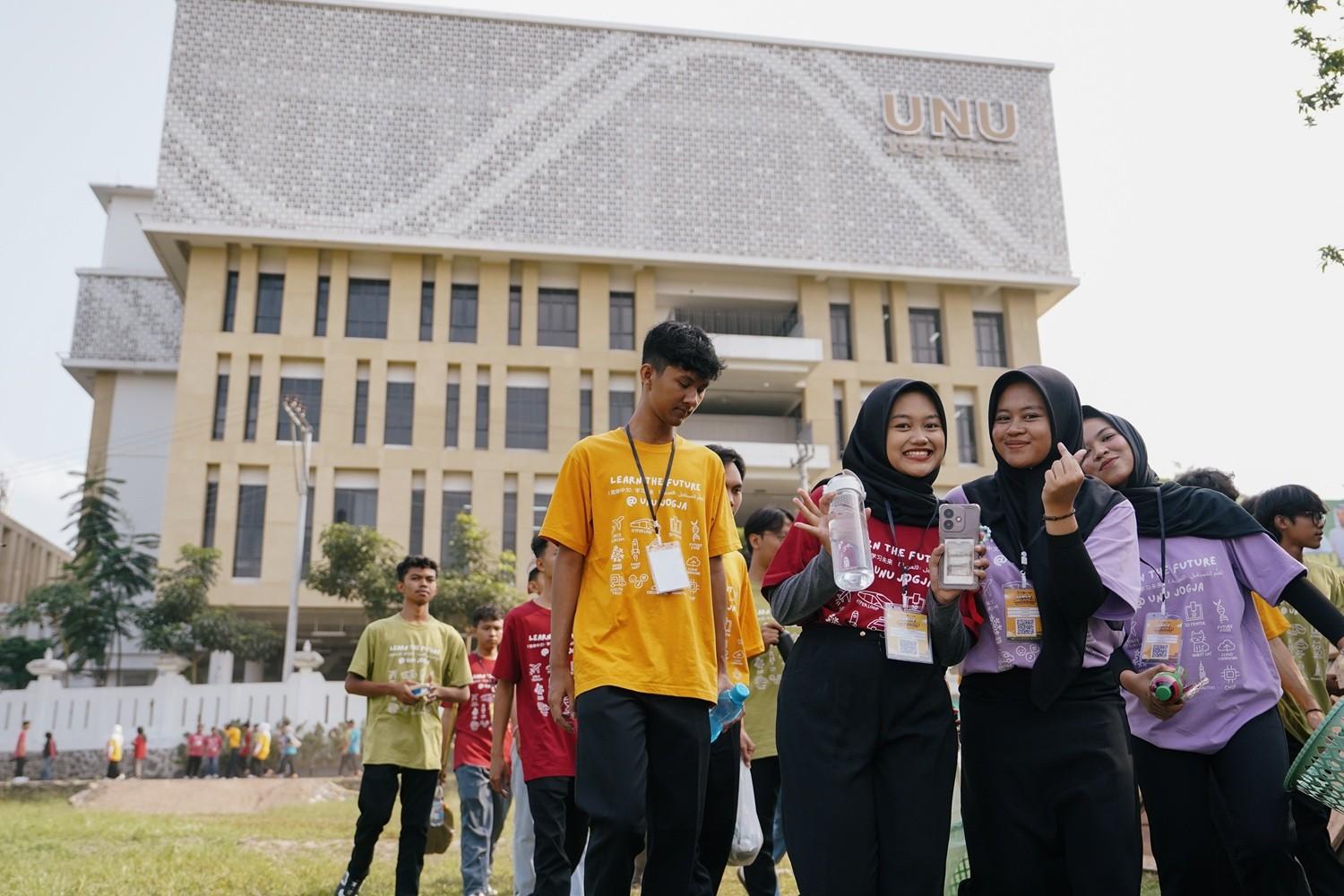
Yogyakarta, Indonesia – Indonesia’s national food security is currently at a critical juncture. On one hand, the government has shown strong commitment through strategic policies such as food self-sufficiency targets, increased domestic production, and the development of food reserves. On the other hand, food security efforts still tend to focus heavily on quantitative production targets, while structural aspects remain insufficiently addressed.
Head of the Agribusiness Study Program at Universitas Nahdlatul Ulama (UNU) Yogyakarta, Nur Sauda Al Arifa, stated that food security is not merely about food availability, but also concerns supply stability, equitable distribution, price affordability, and the welfare of farmers as the main actors in the food system.
“In many cases, increased production does not necessarily lead to higher farmer incomes. High production costs, price fluctuations, and weak bargaining positions in the supply chain place farmers in a vulnerable situation,” she explained.
She added that this condition shows that national food security strategies must go beyond production-oriented approaches. Strengthening food institutions at the local level, such as farmer groups, is essential to ensure national policies are resilient and sustainable.
“Without strong institutional foundations at the grassroots level, food security risks remaining a macro target without real impact on the welfare of farmers and communities,” she added.
Food Security in Agribusiness Learning at UNU Jogja
Food security is an important focus in the Agribusiness Department’s academic curriculum at UNU Jogja. The issue is not only discussed conceptually but is also critically examined across courses.
In the Agribusiness Policy course, students study food self-sufficiency policies and analyze their impacts on farmers, businesses, and communities.
“Students are encouraged to see food policy as a whole, from formulation at the national level to implementation at the local level,” said Nur Sauda.
Food security perspectives are also strengthened through the Agricultural Institutions course, which discusses the role of local institutions such as farmer groups and community food barns in maintaining the sustainability of food systems.
In Production and Marketing Management, students learn how production efficiency and marketing governance influence food availability and affordability. Meanwhile, Quality Management emphasizes the importance of food quality and safety as integral parts of food security.
“With this integrated approach, students understand food security not just as a policy target, but as a system influenced by production, institutions, markets, and food quality, with real social and economic implications for society,” she added.
Student Roles at the Local Level
Agribusiness students play a strategic role as facilitators and community partners at local and regional levels. National food security is fundamentally built upon food security at the village and regional levels, making student involvement at the grassroots crucial.
Through field activities, students help bridge academic knowledge and real-world practice. They are involved in strengthening local food institutions such as farmer groups. Students also assist local food and agribusiness SMEs, particularly in processing agricultural products, improving product quality, packaging, and developing marketing strategies to increase added value and competitiveness.
Assistance is also provided to local livestock farmers, covering business management, production cost recording, and strengthening marketing chains.
“These roles may not always be large in scale, but they directly improve the capacity of local food business actors. Through this approach, Agribusiness students contribute to building more independent, inclusive, and sustainable food security from the ground up,” Nur Sauda explained.
Research, Internships, and Community Engagement
Students in the Agribusiness Department take part in various field-based programs designed to address real issues in agriculture and food systems. These include internships under the Merdeka Belajar–Kampus Merdeka (MBKM) program, community service, and applied research integrated with coursework.
One key activity involves student participation in collaborative lecturer–student research on the Lumbung Pangan Mataraman (Mataraman Community Food Barn). In this program, students not only collect data but also assist in managing food barns, strengthening institutional governance, and monitoring food stocks as part of efforts to reinforce community-based food security in Guwosari Village.
Students also undertake industry internships at agribusiness companies and cooperatives, gaining direct experience in production management, supply chains, and agricultural marketing.
In research, students are involved in studies on regenerative agriculture under the guidance of Agribusiness lecturers, focusing on sustainable farming practices, ecosystem restoration, and long-term resilience of food production systems.
“Through these activities, students not only learn academically but also contribute directly to strengthening sustainable, community-based local food systems,” Nur Sauda said.
Problem-Based Learning Approach
The Agribusiness Department consistently applies a problem-based learning approach. Students are not limited to theoretical learning; instead, they are confronted early on with real challenges faced by the agriculture and food sectors at both local and national levels. From these problems, students are trained to analyze, formulate alternative solutions, and test their implementation in the field.
This approach is also applied in the Agro-Entrepreneurship course starting in the second semester. Students identify real issues in agribusiness — from limited product value addition to market access — and respond by developing product prototypes and business plans based on local potential.
“Students learn to see problems not as obstacles, but as business opportunities,” Nur Sauda said.
Challenges and the Role of Agribusiness Students
One of the biggest challenges faced by farmers today is their weak bargaining position within the agribusiness system, compounded by uncertainty due to climate change and price fluctuations. Farmers often occupy the most vulnerable position, while the greatest added value is enjoyed by downstream actors. In addition, farmer regeneration remains a serious issue, as agriculture is not yet widely seen as an attractive sector for younger generations.
“Here, Agribusiness students play a role in addressing these challenges through knowledge-based assistance, field practice, and a problem-based learning approach,” Nur Sauda said.
Technology Integration
Technology integration focuses on assisting food SMEs and farmer groups and is reinforced through the E-Commerce course. Students help implement simple digital record-keeping systems for production, stock, and operational costs to make farm management more organized and measurable. For food SMEs, students assist in using digital media and online marketing platforms to help businesses expand market access independently.
The Role of Agribusiness Graduates
Graduates of the Agribusiness Department at UNU Jogja are expected to become drivers of change within Indonesia’s food system. They are not only expected to understand food self-sufficiency policies but also to translate them into practical actions at the local level.
“More than that, they are encouraged to become agri-socio entrepreneurs capable of creating agriculture-based businesses with real social and economic impact for communities,” Nur Sauda concluded. [Latifah]
Share
Related News
-1770365210300.jpg?alt=media&token=84c00816-fe49-48f1-aba5-d62ddd8c8c51)
UNU Jogja English Education Students Showcase Their Skills at English Showcase 2026
Published by Latifatussolikhah, 6 Feb, 2026 | Duration. 2 Minutes

Rising Gold Prices Don’t Always Mean Immediate Profit, Says UNU Jogja Accounting Lecturer
Published by Latifatussolikhah, 2 Feb, 2026 | Duration. 3 Minutes
Earning a Doctorate, UNU Jogja Lecturer Explores Andalusian Classical Poetry
Published by Latifatussolikhah, 29 Jan, 2026 | Duration. 3 Minutes
Popular News
UNU Jogja Hadroh Team Wins Second Place in DIY–Central Java Hadroh Competition
Published by Latifatussolikhah, 12 Feb, 2026 | Duration. 2 Minutes
Fahmi Akbar Idries Officially Appointed as Interim Rector, Marking a New Chapter of Leadership at UNU Jogja
Published by Latifatussolikhah, 10 Feb, 2026 | Duration. 2 Minutes
Eight Years with UNU Jogja, 35 Dedicated Staff Members Receive Appreciation from the Rector
Published by Latifatussolikhah, 29 Jan, 2026 | Duration. 2 Minutes
Winning First Place at National PGSD ELDUFEST, UNU Jogja Student Develops “Math Adventure Box”
Published by Latifatussolikhah, 13 Jan, 2026 | Duration. 3 Minutes