
NU and Education
Published by Latifatussolikhah, 21 Aug, 2026
Est. 10 Minutes
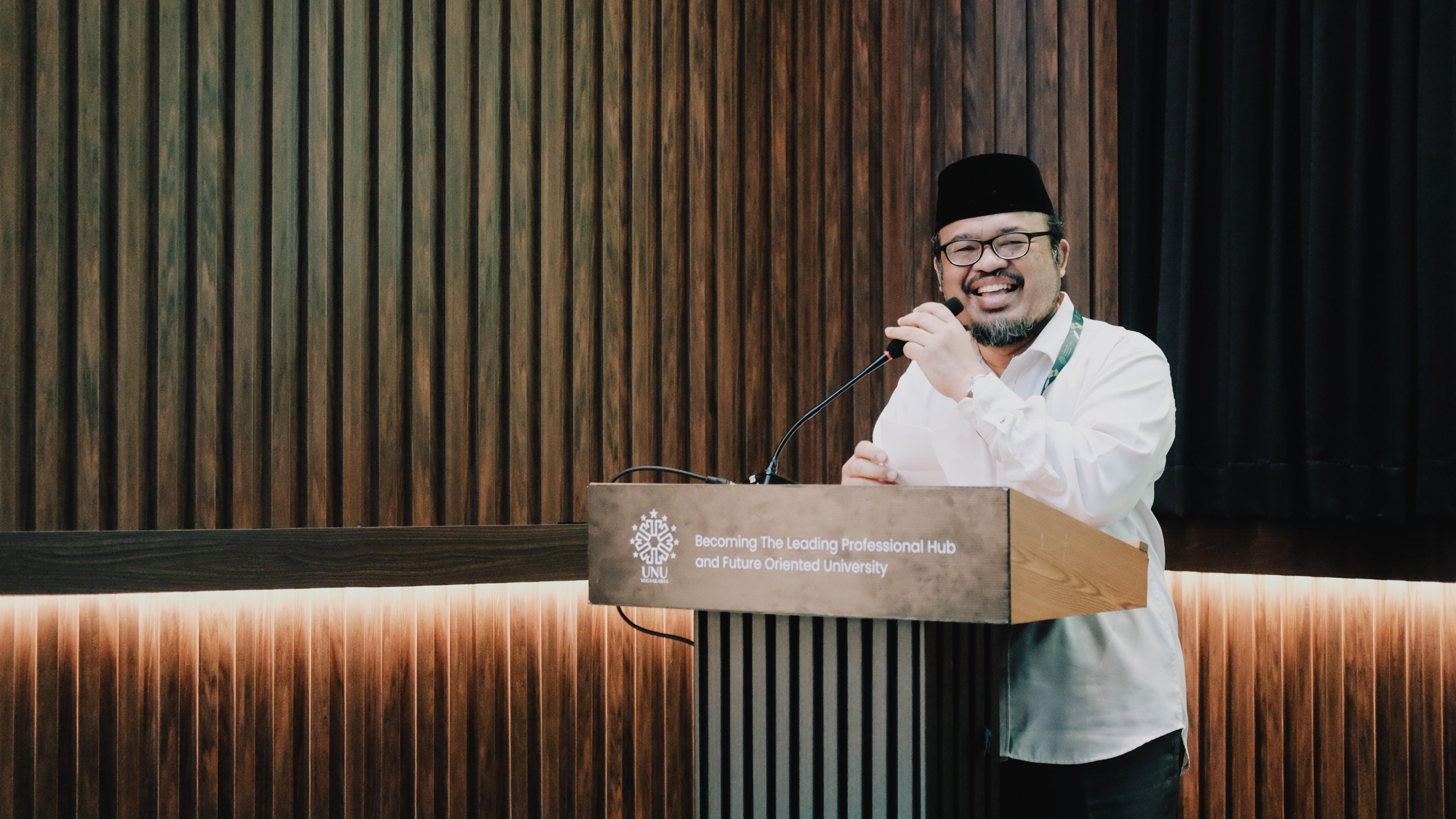
By: Dr. Abdul Ghoffar, M.B.A.
[OPINION] If we take a close look at the discussions taking place recently, particularly as the 35th NU Congress in Jombang approaches, public attention and that of NU members seem to be focused primarily on one question: who will lead NU in the future? Discussions about leadership, often leaning toward the politics of leadership, have become so dominant that other strategic issues appear to have been somewhat sidelined.
Yet NU is not merely about who becomes Rais Aam or General Chairperson. NU is a major organization with social, religious, educational, healthcare, economic, agricultural, cultural, community empowerment, and many other responsibilities. Therefore, the congress should not merely serve as a forum to discuss changes or continuity in leadership. It should also be a moment to reflect on a broader question: what do we want to accomplish with an organization as large and influential as NU?
We should be grateful that the Draft National Education System Bill has become one of the issues to be discussed at the upcoming congress. At the very least, this demonstrates an awareness that NU needs to take part in designing and preparing a better national education system. NU is not merely an object of national education policy; it has extensive experience, resources, and networks that can contribute to shaping the direction of Indonesian education.
In this brief reflection, I would like to highlight one issue that I consider highly strategic for NU: education.
The question is simple: have we truly made the most of NU's educational potential? Or are we still allowing it to develop independently in separate parts, leaving such enormous potential underdeveloped?
Broadly speaking, NU's educational potential can be divided into four major groups. First, schools. Second, Islamic boarding schools, or pesantren. Third, higher education institutions. And fourth, the NU diaspora, both within Indonesia and abroad.
Schools: An Enormous Potential
The first group consists of schools, ranging from elementary schools and madrasah ibtidaiyah (SD/MI), junior high schools and madrasah tsanawiyah (SMP/MTs), to senior high schools, vocational schools, and madrasah aliyah (SMA/SMK/MA). I do not include preschool education here because most of it is managed by Muslimat NU.
These schools can be further divided into two broad categories: schools under the NU Ma'arif Education Institution and non-Ma'arif schools.
Under the NU Ma'arif Education Institution, there are approximately 12,780 schools, consisting of around 7,092 elementary schools and madrasah ibtidaiyah, 3,929 junior high schools and madrasah tsanawiyah, and 1,759 senior high schools, vocational schools, and madrasah aliyah. These figures alone demonstrate how large NU's educational ecosystem actually is.
Beyond Ma'arif schools, there are still thousands of schools managed by NU-affiliated pesantren, foundations established by NU cadres, and educational institutions that have grown within NU communities. There are also public schools that were historically established or pioneered by NU members, or that are located in communities that are culturally rooted in the NU tradition.
This means that if the entire ecosystem could be properly mapped, we would have not only thousands of schools, but also thousands of educational managers, tens or even hundreds of thousands of teachers, and millions of students.
The question, then, is: are all these potentials already connected?
Do we have a sufficiently comprehensive map of these schools? What is the quality of their teachers? What is the quality of their principals? How good is the quality of learning? What are their strengths and weaknesses? And most importantly, do we have a grand design for NU education that can guide these schools toward a common direction?
I believe this is where one of our major challenges lies.
Pesantren: The Heart of NU Education
The second group is pesantren. This is, of course, one of NU's most distinctive strengths.
The pesantren affiliated with Rabithah Ma'ahid Islamiyah (RMI) NU are estimated to number more than 26,000, encompassing both large and small pesantren, with the number of students estimated at around seven million.
I deliberately use the word "estimated" because we do not yet have truly precise figures. In my view, this is itself one of our challenges in the digital era.
If the number of students is still an estimate, that may be understandable. But if the number of institutions or pesantren themselves is still only an estimate, then there is something we need to address immediately. In an era when data has become an essential instrument for decision-making, NU should have an accurate, dynamic, and continuously updated database of its pesantren.
Pesantren are not merely places to study religion. Throughout their history, they have served as centers of character formation, cultural development, community empowerment, and the preservation of the Islamic traditions of Ahlussunnah wal Jamaah.
Generally, pesantren provide education at the primary and secondary levels. However, an increasing number of pesantren are developing higher education programs, either in the form of Ma'had Aly or other higher education institutions that have subsequently become part of the LPTNU ecosystem.
With such a large number of institutions, pesantren are essentially an extraordinarily vast laboratory for NU education.
Unfortunately, this strength has not yet been fully consolidated. Each pesantren has its own strengths and traditions, but not all of them are connected within an ecosystem of knowledge, technology, research, and NU human resource development.
Yet if these more than 26,000 pesantren could learn from one another, share best practices, jointly utilize technology, develop relevant curricula, and build economic and research networks, the impact would be enormous.
Higher Education: Time to Move Up a Level
The third group is higher education institutions.
Currently, there are approximately 280 higher education institutions affiliated with NU—the exact figure, of course, needs to be reviewed and updated by LPTNU. Of these, around 43 higher education institutions are legally established under the NU organization, with approximately 234,000 students. The remainder operate under foundations, either within pesantren communities or outside them.
This ecosystem includes thousands of lecturers, ranging from those holding master's and doctoral degrees to those who have attained the highest academic rank as professors.
This represents enormous intellectual capital.
But once again, the question is not simply how many higher education institutions we have. The more important question is: what can we accomplish together?
Have NU universities and colleges become an interconnected academic network? Are the research projects being conducted already directed toward addressing societal challenges? Have NU professors, doctoral scholars, and researchers been consolidated into a broader academic ecosystem? Do we have a strategic shared research agenda?
We should not end up with many higher education institutions, many doctoral scholars, many professors, and many students, while everyone continues to operate independently.
NU needs a knowledge ecosystem, not merely a collection of higher education institutions.
We need centers of research excellence, networks of professors and doctoral scholars, collaboration among higher education institutions, student and faculty exchanges, and more systematic international cooperation. If these efforts are pursued, NU's higher education institutions will not merely become places that produce degrees, but one of the principal engines of progress for NU and the nation.
The Diaspora: A Potential Yet to Be Fully Embraced
The fourth group is the NU diaspora.
The diaspora is not an educational institution. However, this category is important for helping us identify where NU cadres are and how they can be reached, nurtured, and empowered.
The diaspora can be divided into two groups: those within Indonesia and those abroad.
The domestic diaspora includes NU cadres working or studying at various public and private universities. Their number may reach into the thousands. They are spread across a wide range of academic disciplines and professions, including education, technology, economics, medicine, law, social sciences, politics, agriculture, science, and many other fields.
Unfortunately, we do not yet have adequate data on them.
Yet with a sufficiently comprehensive database, we would know who they are, where they are based, what their areas of expertise are, and how they can contribute to NU.
Abroad, the potential is even more interesting. There are NU cadres pursuing master's and doctoral degrees, as well as lecturers, researchers, professionals, and others working in various international institutions.
They are spread across different countries and centers of knowledge around the world.
This is where NU's Special Branches abroad, or PCI NU, should play a more strategic role. PCI NU should not merely serve as a space for social interaction among NU members overseas; it can also become an intellectual bridge and a global network for NU.
We need to know who they are, what their expertise is, and what they can contribute.
Imagine if all NU professors and doctoral scholars around the world were connected through a single network. Imagine if NU researchers could develop joint research projects with NU universities in Indonesia. Imagine if the diaspora could become gateways for NU's international partnerships. The potential is enormous.
From Quantity to Quality
From this overview, it is clear that NU possesses enormous educational capital. There are thousands of schools, tens of thousands of pesantren, and hundreds of higher education institutions. The number of teachers, lecturers, professors, researchers, santri, and students reaches into the millions.
But the issue is no longer simply how much we have.
The bigger question is: how strategically are we managing this enormous potential?
I believe that much of NU's educational potential is still developing independently. There are schools that have made remarkable progress, but their achievements are not widely known among other NU schools. There are pesantren with excellent educational innovations, but their practices have not been sufficiently documented or replicated. There are higher education institutions with outstanding professors and research centers, but they are not yet sufficiently connected to the needs of pesantren and NU communities. There are members of the diaspora with extraordinary expertise, yet they may not even be known to the NU organizational structure.
This is our challenge.
Perhaps it is time for NU to move beyond talking merely about the number of institutions and start talking about the quality of its ecosystem.
We need a comprehensive map of NU education: an accurate and integrated database. We need to know what resources we have, what their strengths are, where their weaknesses lie, and where they should be developed.
More than that, we need a kind of grand design for NU education that connects schools, pesantren, higher education institutions, and the diaspora within one broad ecosystem.
This is not about making everything uniform. NU must continue to preserve the diversity and distinctive characteristics of each institution. But this diversity needs to be united by a shared vision and common agenda.
Because ultimately, education is not merely one of NU's programs. Education is one of the principal foundations of NU's future.
If we want NU to advance, education must be a priority. If we want this nation to progress, NU must contribute to building a high-quality national education system. And if we want the NU generation of the next twenty or fifty years to remain an important force in this country, then the greatest investment we must make today is an investment in people.
Therefore, as the 35th NU Congress in Jombang approaches, I believe we need to broaden the conversation. We should not only ask who will lead NU, but also ask: where will NU be taken?
Whoever eventually leads NU will face the same challenge: how to transform NU's enormous potential into real strength. And one of its greatest strengths is right before our eyes: education.
The question is whether we are willing to develop it seriously or simply allow it to grow independently. If NU education can be consolidated, I believe we will not merely be building schools, pesantren, and higher education institutions. We will be preparing the future of NU and the future of Indonesia.*
Author: Dr. Abdul Ghoffar, M.B.A., currently serves as Vice Rector for Pesantren Education and Social Transformation at Universitas Nahdlatul Ulama Yogyakarta. In addition to his academic work, he is also known as a social activist and Islamic scholar, and is actively involved in the leadership of PWNU DIY as an A’wan Syuriah for the 2022–2027 term.
Editor: Latifah
Editorial Note: This article is the work of the author. All content, views, interpretations, and information presented are the responsibility of the author. The editorial team is not responsible for any views or opinions expressed in the article beyond the editing process undertaken for publication.
Share
Related News
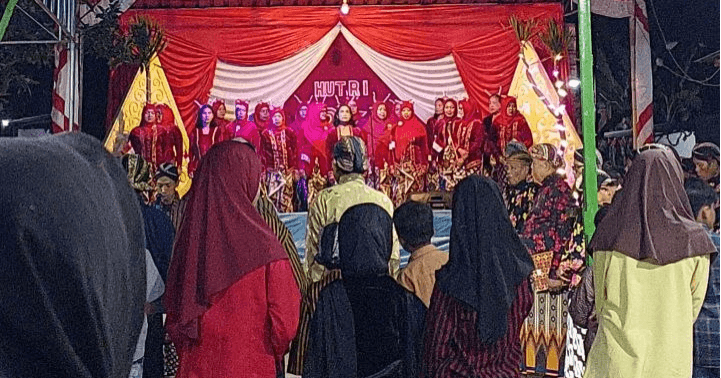
After the Tahlil, Kaliabu Kidul Residents Celebrate Independence with a Karaoke Contest
Published by Latifatussolikhah, 20 Aug, 2026 | Duration. 9 Minutes
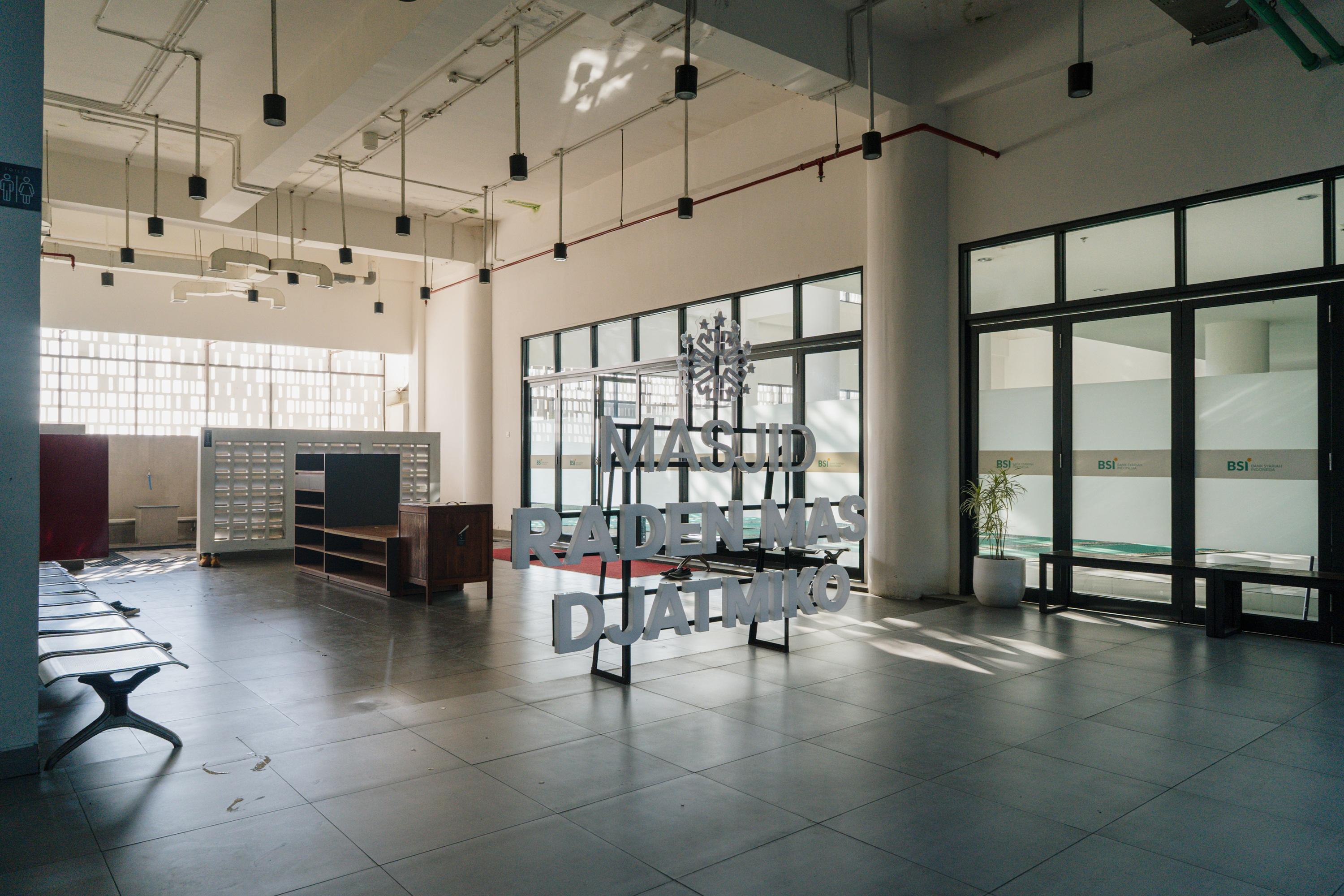
When Ablution Becomes a Challenge: Yuyun's Story and the Pursuit of Inclusive Mosques
Published by Latifatussolikhah, 17 Jul, 2026 | Duration. 5 Minutes

Free Nutritious Meal Program During Ramadan, PGSD UNU Jogja Encourages an Educational Approach in Elementary Schools
Published by Latifatussolikhah, 5 Feb, 2026 | Duration. 2 Minutes
Popular News
Mutiara Azzahra Tzabitah Zain Ababil, Deaf Student of UNU Jogja's Food Technology Study Program, Wins First Runner-Up at the 2026 Deaf Inter-Club Futsal Tournament
Published by Latifatussolikhah, 7 Aug, 2026 | Duration. 3 Minutes
UNU Jogja PGSD Students Win Second Place in National Children's Songwriting Competition
Published by Latifatussolikhah, 7 Aug, 2026 | Duration. 4 Minutes
UNU Jogja's JQH IAC Wins First Place in the Men's Category and Overall Champion at the 11th PBNU Barzanji Festival
Published by Latifatussolikhah, 27 Jul, 2026 | Duration. 2 Minutes
FREQUENTLY ASKED QUESTIONS (FAQ): BEASISWA TALENTA LESTARI 2026
Published by Latifatussolikhah, 21 Jul, 2026 | Duration. 9 Minutes