
Fasting and Mental Health: UNU Yogyakarta Lecturer Explains Ramadan’s Role in Students’ Emotional Stability
Published by Latifatussolikhah, 4 Mar, 2026
Est. 5 Minutes
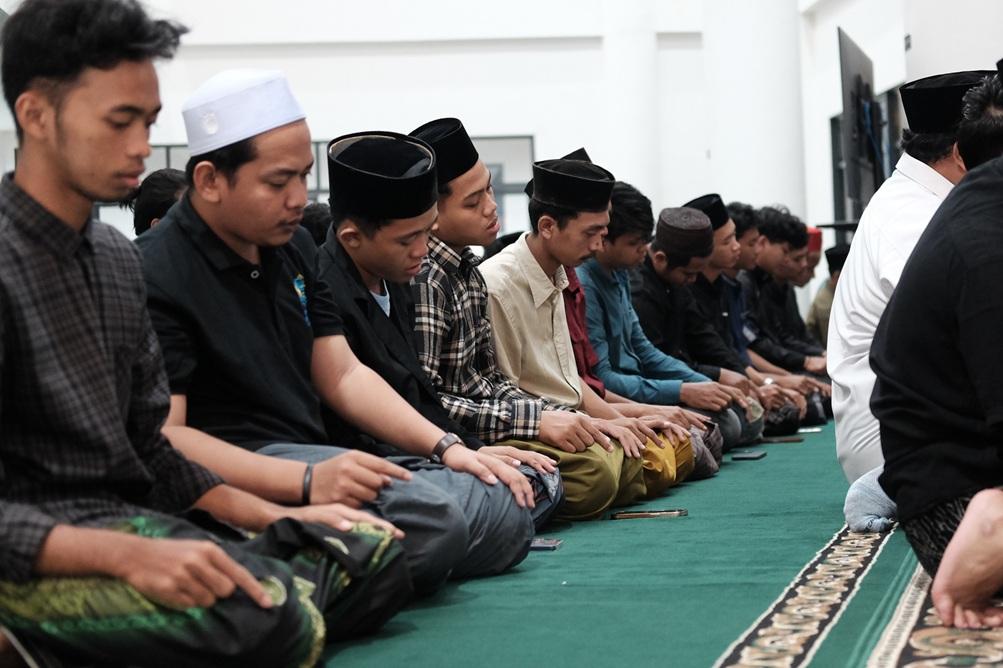
Fasting during the month of Ramadan is not merely an act of worship involving abstention from food and drink. It also carries significant benefits for mental health. From the perspective of Islamic psychology, fasting serves as a means of self-regulation and control over human impulses.
Beyond its spiritual dimension, fasting has a profound influence on psychological well-being, particularly in addressing mental health challenges among young people. Academic pressure, social demands, uncertainty about the future, and the overwhelming influence of digital media often affect emotional stability and inner balance.
Nuzulia Febri Hidayati, a lecturer in the Department of Interdisciplinary Islamic Studies at Universitas Nahdlatul Ulama Yogyakarta (UNU Jogja), explained that fasting, as stated in Qur’an Surah Al-Baqarah (2:183), is prescribed with the purpose of la‘allakum tattaqun—so that you may attain piety.
“Piety in Islamic intellectual tradition is not limited to ritual obedience. It reflects spiritual awareness that nurtures self-control, moral clarity, and inner balance. From this perspective, fasting can be understood as a process of tazkiyatun nafs (purification of the soul),” she stated.
The concept of tazkiyatun nafs plays a vital role in emotional regulation, cognitive restructuring, and the development of healthier mental habits.
Fasting and the Transformation of the Soul
In the Islamic intellectual tradition, the human soul is classified into several levels: first, nafs ammarah (the soul inclined toward impulsive desires); second, nafs lawwamah (the self-reflective soul that reproaches itself for wrongdoing); and third, nafs muthmainnah (the tranquil soul). The transformation toward muthmainnah does not occur instantly but requires a sustained spiritual process through consistent inner discipline.
Nuzulia added that fasting functions as riyadhah an-nafs, a spiritual exercise aimed at subduing the dominance of base desires. She explained that when a person is able to restrain hunger, thirst, and emotional impulses throughout the day, they are essentially cultivating the capacity for self-regulation.
“In modern psychological terms, this relates to self-regulation and emotional control. In Islamic terminology, it is the practice of sabr (patience) and mujahadah (spiritual striving),” she noted.
In line with this perspective, prominent scholar Abu Hamid al-Ghazali, in his monumental work Ihya’ Ulum al-Din, emphasized the importance of controlling desires as a pathway to achieving clarity of the heart (qalb). A purified heart radiates tranquility, whereas a heart dominated by unchecked desires becomes vulnerable to anxiety.
Thus, fasting not only produces physical effects but also contributes to mental stability through the purification of the inner dimension.
Spirituality and Emotional Stability
The correlation between spirituality and emotional calmness has long been recognized in Islamic teachings. The Qur’an states, “Indeed, in the remembrance of God do hearts find tranquility” (Qur’an 13:28). This verse highlights that emotional stability in Islam is rooted in divine consciousness.
During Ramadan, when acts of worship intensify—such as night prayers, Qur’anic recitation, supplication, and charity—individuals often experience a strengthened sense of meaning in life.
“Those who understand their lives as part of God’s divine plan tend to adopt a broader perspective toward challenges. Trials are not merely burdens but forms of ibtila’—processes of spiritual refinement and elevation,” Nuzulia added.
Ramadan as a School of Resilience for Students
University students are particularly vulnerable to psychological stress due to academic targets, competition, and social expectations. In this context, Ramadan can function as a madrasah ruhaniyyah—a spiritual school that cultivates mental resilience.
First, fasting instills patience, strengthening one’s tolerance for frustration.
Second, the practice of muhasabah (self-reflection), commonly performed during Ramadan, encourages students to reassess their life orientation.
Third, strengthened social bonds through communal worship and charitable activities enhance social support, a crucial factor in maintaining mental well-being.
In Islamic thought, resilience is not merely the ability to survive adversity but the ability to grow through it. This aligns with the concept of tawakkul—placing trust in God after exerting maximum effort. Therefore, Ramadan is not only a ritual moment but also a formative process for building spiritually grounded resilience.
Fasting as Spiritual Therapy
In Sufi tradition, fasting is viewed as a means of inner healing. It weakens materialistic dominance and strengthens transcendental awareness. Amid the noise and speed of modern life, fasting creates a quiet space for the soul to reconnect with its natural disposition (fitrah).
However, Nuzulia emphasized that from an academic standpoint, fasting as spiritual therapy should be understood as complementary.
“It can enhance inner peace and emotional balance, but it does not replace medical intervention for clinical mental disorders. Islam itself teaches the principle of balance (tawazun) between spiritual effort and rational or medical treatment,” she clarified.
An Interdisciplinary Perspective on Worship and Psychology
Contemporary Islamic studies increasingly adopt integrative approaches that combine normative texts (the Qur’an and Hadith), classical intellectual heritage (turats), and modern sciences.
Within this framework, worship is understood as a multidimensional practice encompassing theological devotion, psychological regulation, and social solidarity.
An interdisciplinary approach opens space for dialogue between Islamic Studies and modern psychology. Fasting is thus not viewed solely as a ritual obligation but as a mechanism for forming a holistic human being (insan kamil)—spiritually, intellectually, and emotionally mature.
This demonstrates the relevance of Islamic Studies in addressing contemporary humanitarian issues, including mental health challenges.
Ultimately, Ramadan teaches that mental health is not merely the absence of disorder but the inner capacity to align oneself with divine values.
“Fasting as tazkiyatun nafs embodies purification, self-discipline, and deep existential meaning,” Nuzulia concluded.
In a fast-paced and pressure-filled world, spiritual practices such as fasting can provide both a calming pause and a foundation for inner resilience. Ramadan, therefore, is not simply an annual ritual but a transformative process toward becoming more mindful, patient, and emotionally stable. [Latifah]
Share
Related News

Safe Fasting, Medication Continues: UNU Jogja Pharmacy Lecturer Highlights the Importance of Adjusting Medication Schedules During Ramadan
Published by Latifatussolikhah, 27 Feb, 2026 | Duration. 3 Minutes
Ramadan Against the Culture of Social Media Scrolling: Time for Students to Rise as Muslim Creators with Purpose
Published by Latifatussolikhah, 23 Feb, 2026 | Duration. 3 Minutes
UNU Jogja Adds to Its Doctoral Ranks, Agribusiness Lecturer Researches Eco-Efficiency of Dairy Farming in Sleman
Published by Latifatussolikhah, 18 Feb, 2026 | Duration. 3 Minutes
Popular News
UNU Jogja Receives 2025 Best Empowerment Partner Award from BTPN Syariah
Published by Latifatussolikhah, 27 Feb, 2026 | Duration. 2 Minutes
UNU Jogja Hadroh Team Wins Second Place in DIY–Central Java Hadroh Competition
Published by Latifatussolikhah, 12 Feb, 2026 | Duration. 2 Minutes
Fahmi Akbar Idries Officially Appointed as Interim Rector, Marking a New Chapter of Leadership at UNU Jogja
Published by Latifatussolikhah, 10 Feb, 2026 | Duration. 2 Minutes
Eight Years with UNU Jogja, 35 Dedicated Staff Members Receive Appreciation from the Rector
Published by Latifatussolikhah, 29 Jan, 2026 | Duration. 2 Minutes