
SADA: Managing Constraints, Building Togetherness
Published by Latifatussolikhah, 27 Nov, 2026
Est. 3 Minutes
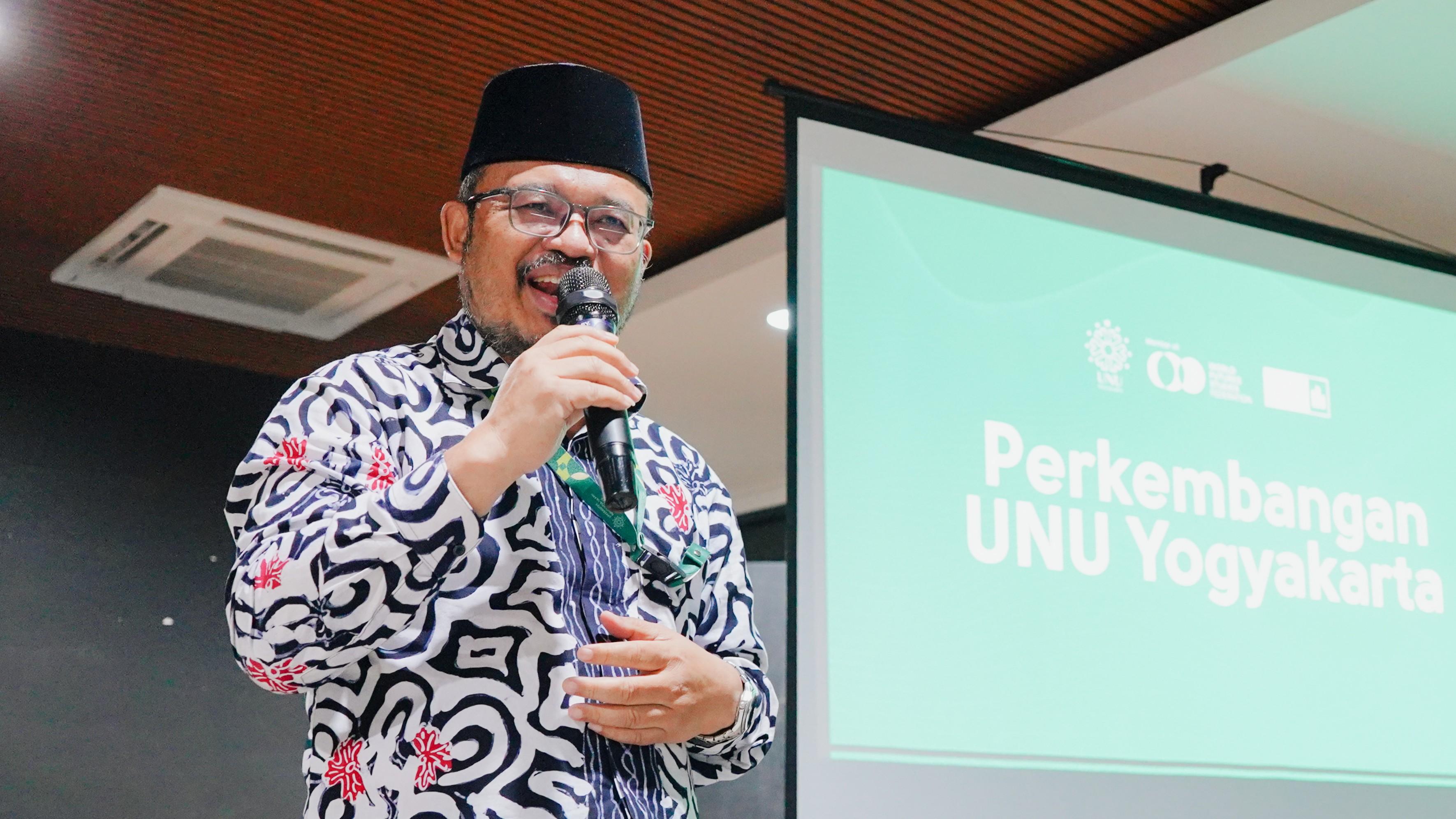
By Dr. Abdul Ghoffar, M.B.A.
[OPINION] Every university needs to choose the right governance model to grow and develop. For Universitas Nahdlatul Ulama Yogyakarta (UNU Jogja), one such choice is SADA: Centralized Administration and Decentralized Academic Affairs.
The concept is simple, yet it carries an important philosophy. Administrative matters and resource management—including finance, human resources, assets, facilities and infrastructure, and information systems—are managed centrally at the university level. The aim is to ensure effectiveness, efficiency, standardization, and accountability. Meanwhile, academic affairs, ranging from curriculum development and teaching to research and community service, are entrusted to faculties and study programs with greater flexibility. This allows creativity and academic autonomy to flourish.
SADA is not a formal term established in higher education regulations. However, its underlying principles are grounded in Law No. 12 of 2012 on Higher Education, particularly Article 64, which distinguishes autonomy in academic and non-academic management. Further provisions are set out in Government Regulation No. 4 of 2014. Its implementation is subsequently reflected in university statutes and internal policies.
Why has UNU Jogja chosen SADA? There are at least two considerations.
First, the university's relatively small size calls for agile and responsive governance. With five faculties and ten study programs, UNU needs interconnected operations rather than a structure that could create silos and sectoral interests. We seek to build the university as a unified institution, where every unit grows together and supports one another.
Second, limited resources require careful management. Not every task needs to be handled independently by each unit. Some functions can be performed more effectively through shared management. The principle is straightforward: how can limited resources generate greater impact? How can efficiency create more room for innovation, collaboration, and improved performance?
Of course, SADA also presents challenges. Centralization can lead to delays if it is not supported by effective services, while academic decentralization requires trust and accountability from every unit. Governance, therefore, is not merely about distributing authority; it is also about fostering a working culture, coordination, and a shared commitment to a common goal.
Alhamdulillah, as UNU Jogja enters its first decade, the university has demonstrated its development and capacity to stand alongside other, more established higher education institutions. Naturally, many challenges remain. Yet this journey has taught us that building a university does not always have to begin with abundant resources. What matters more is how we manage what we have, choose the right strategies, and sustain our commitment to growth.
Ultimately, SADA is more than a governance model. It is an effort to establish balance: orderly administration, academic freedom, and an organization that moves forward together. A great university is not simply one with abundant resources, but one that can transform its available resources into a foundation for continued development.
The principle is simple: continuous improvement. Never consider the work complete, remain willing to make adjustments, and keep learning to become better.
Author: Dr. Abdul Ghoffar, M.B.A., currently serves as Vice Rector for Pesantren Education and Social Transformation at Universitas Nahdlatul Ulama Yogyakarta. In addition to his work as an academic, he is known as a social activist and Islamic scholar. He also serves on the Syuriah Council of the Nahdlatul Ulama Regional Board of Yogyakarta (PWNU DIY) as an A’wan for the 2022–2027 term.
Editor: Latifah
Editorial Note: This article is the author's work. All content, views, interpretations, and information presented are the author's responsibility. The editorial team is not responsible for the opinions or viewpoints expressed in this article, apart from editorial changes made for publication purposes.
Share
Related News

Forest Fires and the Impact on Biodiversity
Published by Latifatussolikhah, 20 Nov, 2026 | Duration. 7 Minutes
Building UNU Yogyakarta’s Global Competitiveness
Published by Latifatussolikhah, 20 Nov, 2026 | Duration. 6 Minutes
Building a Pesantren-Based Ecosystem
Published by Latifatussolikhah, 9 Nov, 2026 | Duration. 13 Minutes