
Boosting the Local Economy of Giripurwo Village, DIY, UNU Jogja Lecturers and Students Offer Water and Electricity Solutions through the Kosabangsa Program
Published by Latifatussolikhah, 7 Jan, 2026
Est. 4 Minutes
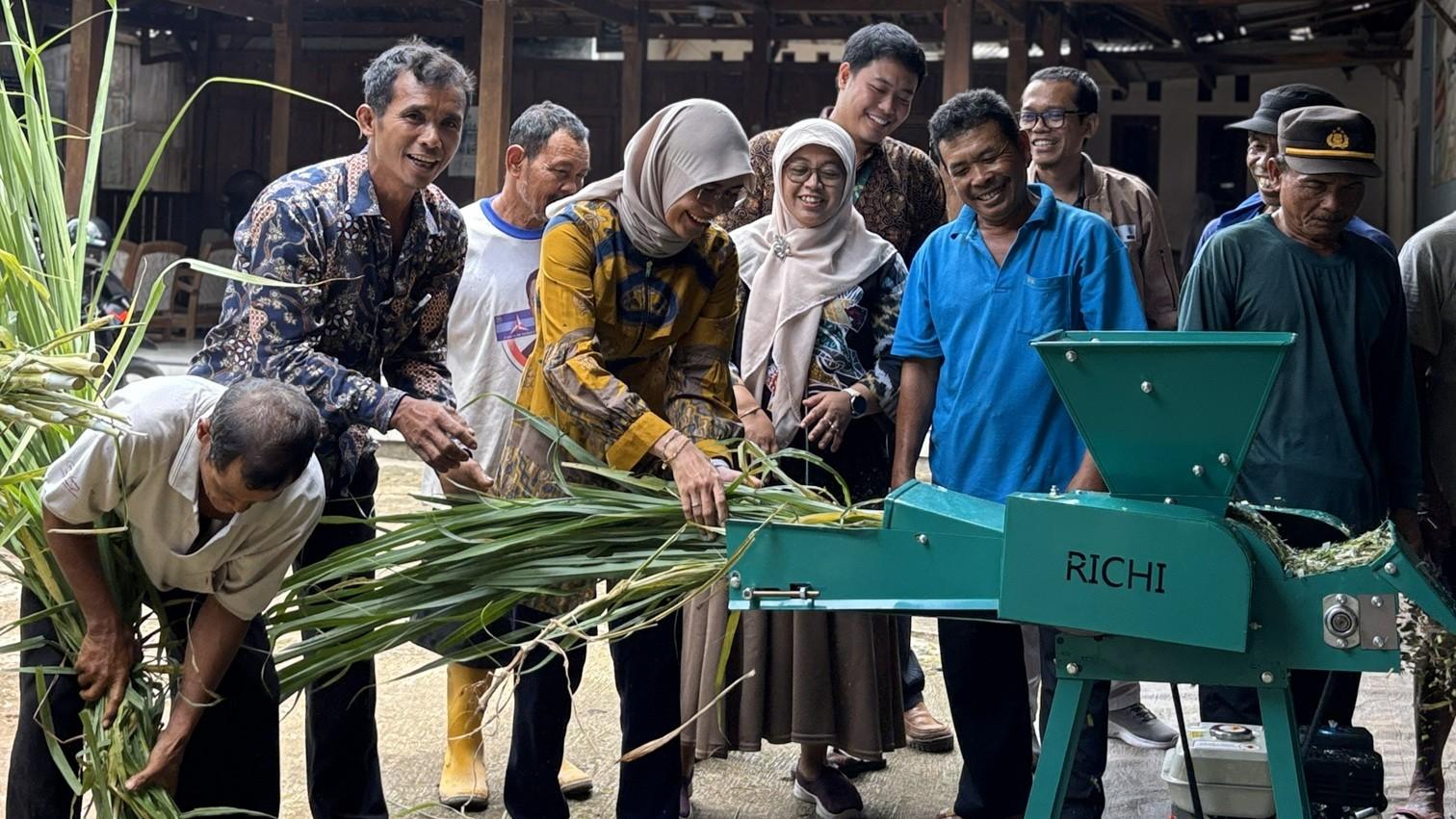
Yogyakarta, Indonesia — A team of lecturers and students from Universitas Nahdlatul Ulama Yogyakarta (UNU Jogja) has successfully enhanced water productivity for livestock feed gardens and electricity efficiency in batik production in Giripurwo Village, Purwosari Sub-district, Gunungkidul Regency, Special Region of Yogyakarta.
As a private university based in Yogyakarta, UNU Jogja continues to demonstrate its commitment to community empowerment, particularly in strengthening the economic independence of livestock farmer groups and women-led batik artisan groups (PKK) in Giripurwo Village.
The Head of the UNU Jogja Kosabangsa Team and a lecturer in the Accounting Department, Zulfatun Ruscitasari, S.E., M.Acc., explained that geographically, Giripurwo Village is dominated by steep limestone hills and lowlands with limestone sedimentation. These conditions make the land difficult to manage and highly prone to drought.
“Most residents rely on agriculture as well as cattle and goat farming for their livelihoods. These sectors require sufficient water supply. However, in reality, the community faces water shortages due to soil conditions, especially during the dry season,” she said.
Livestock and Batik as Key Commodities in Giripurwo
Based on a field survey conducted by five UNU Jogja students from the Accounting, Electrical Engineering, and Computer Engineering programs, Giripurwo Village has two main economic commodities: livestock farming managed by local farmer groups and batik production managed by PKK women artisans. Both sectors are highly dependent on water and electricity availability.
Promoting Livestock Feed Production through Gama Umami Grass
Zulfatun noted that Giripurwo Village currently has 12 cattle and goat farmer groups that rely heavily on fresh grass as the primary feed source.
“Due to the limestone soil conditions, water scarcity poses a major challenge to fresh grass availability. Moreover, the community still applies traditional feeding methods using fresh grass, hay, and haylage without long-term preservation systems, resulting in limited feed stocks,” she explained.
As a result, farmers are forced to purchase additional feed from outside the area at prices ranging from IDR 2,500 to IDR 15,000 per bundle, increasing operational costs by 30–40 percent per month.
To address this issue, the UNU Jogja team introduced Gama Umami grass, a forage crop known for its adaptability to marginal land with low rainfall while maintaining high nutritional value for livestock growth. The cultivation process is supported by renewable energy technology in the form of solar-powered water pumps for irrigation systems.
“With this innovation, farmers can reduce dependence on limited water sources while significantly lowering operational costs,” she added.
As a result, green fodder availability, which previously met only 40–50 percent of livestock needs, has increased to 80–90 percent. Dependence on externally sourced feed has decreased, reducing feed costs by up to 30–40 percent.
Solar Energy Implementation and Business Literacy for Batik Artisans
In addition to livestock farming, renewable energy solutions have also been successfully applied in batik production. Solar energy is used to support batik production equipment that previously relied solely on conventional electricity.
One of the team members and a lecturer in the Electrical Engineering Department, Irwan Novianto, S.T., M.Eng., explained that solar power has effectively replaced conventional electricity, ensuring that frequent power outages in Giripurwo Village no longer disrupt batik production activities.
Meanwhile, Septian Rico Hermawan, S.Kom., M.Eng., a lecturer in the Computer Engineering Department and a member of the team, added that the application of this technology has significantly increased production output. Batik production, which previously ranged from 5–10 pieces per week, has risen to 10–15 pieces per week an increase of approximately 50–100 percent, or 1.5 to 2 times higher than before.
Beyond clean energy adoption, the UNU Jogja team also provided training in financial management and digital marketing through the use of social media and e-commerce platforms such as WhatsApp, Instagram, and Shopee.
Research findings indicate that solar energy utilization can reduce operational costs by up to 80 percent, while digital marketing strategies have proven effective in expanding market reach for local products.
“With the implementation of these solutions, PKK groups are expected to improve productivity, strengthen business management, and achieve sustainable economic growth based on clean energy and digitalized marketing,” Zulfatun concluded. [Latifah]
Share
Related News
UNU Jogja Presents the Achievements of the 2025 Project-Based MKWK Development Grant to the Ministry of Higher Education, Science, and Technology
Published by Latifatussolikhah, 3 Dec, 2025 | Duration. 2 Minutes
UNU Jogja Promotes Pesantren Economic Independence Through Waste Shredding Technology
Published by Latifatussolikhah, 26 Nov, 2025 | Duration. 2 Minutes
UNU Jogja Assists Giripurwo Batik Group in Strengthening Financial Management
Published by Latifatussolikhah, 20 Aug, 2025 | Duration. 2 Minutes
Popular News
UNU Jogja Ranks Among the World’s Top 20 at the QS Reimagine Education Awards 2025
Published by Latifatussolikhah, 8 Jan, 2026 | Duration. 2 Minutes
UNU Jogja Library Officially Earns A Accreditation from the National Library, Strengthening Its Position as a Quality University in Yogyakarta
Published by Latifatussolikhah, 6 Jan, 2026 | Duration. 2 Minutes
PGSD Students Win Third Place in National Learning Media Competition Cipta Karsa Mahasiswa 2025
Published by Latifatussolikhah, 22 Dec, 2025 | Duration. 2 Minutes
UNU Jogja Ranks in the Top 10 NU-Affiliated Universities in Indonesia According to SINTA
Published by Latifatussolikhah, 1 Dec, 2025 | Duration. 2 Minutes