
Visiting the Land of Imams: Exploring Uzbekistan’s Rich Islamic Heritage
Published by Latifatussolikhah, 30 Oct, 2026
Est. 5 Minutes
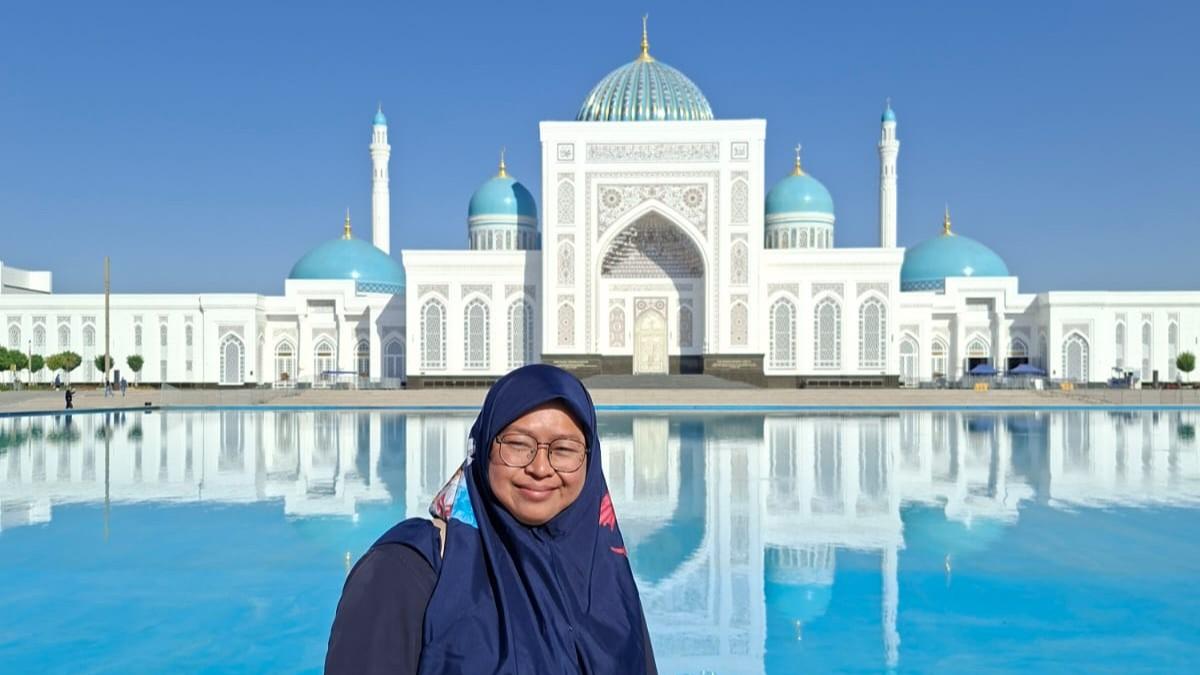
Uzbekistan - Nur Hidayah, a lecturer in the Interdisciplinary Islamic Studies Program at Universitas Nahdlatul Ulama Yogyakarta (UNU Jogja), had the opportunity to conduct a research visit to Uzbekistan last September. Supported by LPTNU Indonesia and the Maturidi Center Uzbekistan, the program aimed to explore the Maturidi school of theology, one of the significant traditions in Islamic scholarship.
During the visit, however, she encountered more than the subject of her research. She was particularly struck by how Uzbekistan preserves its Islamic intellectual and cultural heritage, safeguarding a valuable legacy for future generations and the wider world.
After traveling more than 6,800 kilometers from Indonesia to Uzbekistan, Hidayah initially felt apprehensive—even afraid—of setting foot in the country. It was understandable, she thought, given that Uzbekistan was home to some of the most influential figures in Islamic scholarship.
Among them were Imam Bukhari, Imam Maturidi, Imam an-Naqshbandi, Imam Layth as-Samarqandi, and Imam Qaffal ash-Shashi. These renowned scholars occupy an important place in the history of Islamic civilization.
To Hidayah, the spiritual distance between herself and these revered imams seemed even greater than the distance covered by her flight. While they were pious figures, she felt that she remained attached to worldly concerns. She questioned whether she was worthy of learning directly from the legacy of scholars whose knowledge was so vast. “I felt unworthy of approaching them,” she said.
Yet, as she set foot in several cities across Uzbekistan, her anxiety gradually gave way to awe. Together with three other academics participating in the program, Hidayah visited the historical sites that preserve the legacy of Islamic knowledge.
Uzbekistan is part of what is known in Arabic as bilad ma wara’ an-nahr, literally meaning “the lands beyond the river.” Situated along the Silk Road, which connected Central Asia with the Middle East, the country occupied a strategic crossroads between nations and civilizations. This position has left Uzbekistan rich with traces of medieval Islamic history.
Samarkand and Bukhara are two cities of particular historical significance. They were the main destinations of the visit, as both served as melting pots of knowledge and ideas from Europe, the Arab world, China, Persia, Türkiye, and other regions in earlier centuries.
These cities were home to major figures in Islamic scholarship whose books and teachings continue to be read, studied, and practiced in many countries today. The visit offered a valuable opportunity to conduct research while embarking on a spiritual journey through visits to the scholars’ tombs.
“Those two cities took me into another dimension, back to the era when the great imams lived and nurtured religious knowledge,” she reflected.
In Uzbekistan, these scholars seem almost immortal. Their legacies have been brought back to life—not only through the artifacts on display but also through the ideas and intellectual traditions that gave rise to them. Their mentifacts, or systems of ideas, are presented alongside physical artifacts, while their sociofacts can be experienced through the courtesy and politeness of Uzbek people.
These efforts reflect the country’s commitment to preserving centuries-old Islamic intellectual heritage. Uzbekistan invests substantial resources in the study and research of its medieval civilization and the many traces it has left behind.
The lives and contributions of scholars and intellectual figures are examined in depth. The findings are not confined to written publications; they are also exhibited and presented to international audiences. This approach is evident at the Islamic Civilization Center in Tashkent, which Hidayah also visited. The museum presents its collections in an engaging way, including through the use of artificial intelligence.
“As a country that is only 35 years old, Uzbekistan is remarkable in its commitment to preserving its Islamic intellectual and cultural heritage,” she said.
In Tashkent, she also visited the Imam Bukhari Institute, a higher education institution named after the renowned scholar. One distinctive feature of the institute is its teaching system, which uses reference texts similar to those studied in Nahdlatul Ulama Islamic boarding schools in Indonesia. Students receive an ijazah, or certificate of scholarly authorization, upon completing the study of a particular text. To obtain an ijazah for Imam Bukhari’s hadith collection, students read several of the final hadiths at the imam’s tomb.
During her visit to the higher education institution, Hidayah was also given the opportunity to present one of her research papers. The study examined Imam Maturidi’s choice of words when presenting the views of other theological groups in his work Kitab at-Tawhid.
The opportunity was particularly meaningful because she was the only female participant in the visiting research program organized by LPTNU and the Maturidi Center, as well as the only woman in the forum. In Uzbekistan’s Islamic studies culture, men and women are separated and do not attend classes together.
“Another aspect that caught my attention was Islamic education here. I observed that the government is quite serious about producing competent and certified religious graduates. Prospective religious educators must obtain certification before they can preach,” she said.
Another aspect that fascinated Hidayah was the important role women play in Sufi traditions. Women have their own spiritual networks, institutions, and mystical expressions, distinct from those of men. One example is Otin-oyi, a term referring to female religious scholars, who form an autonomous institution of spiritual leaders serving women’s communities.
In gatherings attended by both men and women, women may lead prayers because they are considered to have fewer sins.
By the end of the visit, Hidayah’s feelings had gradually changed. Her initial apprehension had subsided, replaced by a sense of peace. Throughout Uzbekistan, in every city where traces of Islamic heritage remained, she felt welcomed, received prayers, and gained knowledge.
“I was initially afraid to come here, but now a part of my heart remains in this city,” Hidayah said. []
Reporter: Latifah
Writer: Arif
Share
Related News
Nurturing Hope (3)
Published by Latifatussolikhah, 30 Oct, 2026 | Duration. 10 Minutes
It Is Time for Santri to Level Up: Bringing Traditional Values to the International Stage
Published by Latifatussolikhah, 23 Oct, 2026 | Duration. 7 Minutes
UNU Jogja Traces Islamic Scholars’ Legacy Through Auliya Pilgrimage on National Santri Day 2026
Published by Latifatussolikhah, 23 Oct, 2026 | Duration. 3 Minutes
Popular News
UNU Jogja Students Represent Indonesia at Islamic World Cultural Dialogue Forum in Russia
Published by Latifatussolikhah, 26 Oct, 2026 | Duration. 3 Minutes
Five PGSD UNU Jogja Alumni Pass Teacher Professional Education Program, Prepare to Become Future Teachers
Published by Latifatussolikhah, 1 Oct, 2026 | Duration. 4 Minutes
UNU Jogja Management Student Muhamad Chaerul Faalih Named 2nd Runner Up Putra Bahari DIY 2026
Published by Latifatussolikhah, 30 Sep, 2026 | Duration. 5 Minutes
UNU Jogja Students Pass P2MW Selection and Join KMI Expo XVII 2026
Published by Latifatussolikhah, 15 Sep, 2026 | Duration. 3 Minutes