
When the “Halal” Label Sells “Green”: Uncovering the Phenomenon of Halal Greenwashing
Published by Latifatussolikhah, 21 Aug, 2026
Est. 4 Minutes

By: Budi Sutiono PN, S.E., M.M.
[OPINION] The phenomenon of halal greenwashing has emerged as a serious challenge amid the rapid growth of the global halal industry, which is increasingly responding to the trend toward sustainable lifestyles. As modern consumers demand products that are not only compliant with Islamic law but also environmentally friendly and ethically produced, many companies have responded by incorporating halal claims and eco-friendly narratives into their marketing strategies. This development reflects a broader paradigm shift in the global market, in which spiritual values and ecological responsibility are increasingly intertwined as a new consideration in consumers’ purchasing decisions.
Unfortunately, a number of producers exploit this combination of narratives merely as a visual gimmick—using green-colored packaging, symbolic ornaments, or soothing images of nature—without providing substantive evidence through their supply-chain practices. Such superficial branding can mislead a public increasingly eager to support ethical products. In substantive terms, this practice creates a form of moral dissonance by reducing the essence of halalan thayyiban, in which the concept of thayyib should encompass goodness in a broad and holistic sense, including ecosystem preservation, social justice, the protection of workers’ rights, and production processes free from environmental exploitation. Neglecting environmental well-being for the sake of profit margins ultimately constitutes a deviation from the very essence of thayyib itself.
The Dialectics of Halal Greenwashing in the Modern Market
Academically, halal greenwashing can be understood through a dialectical relationship in which various stakeholders influence one another:
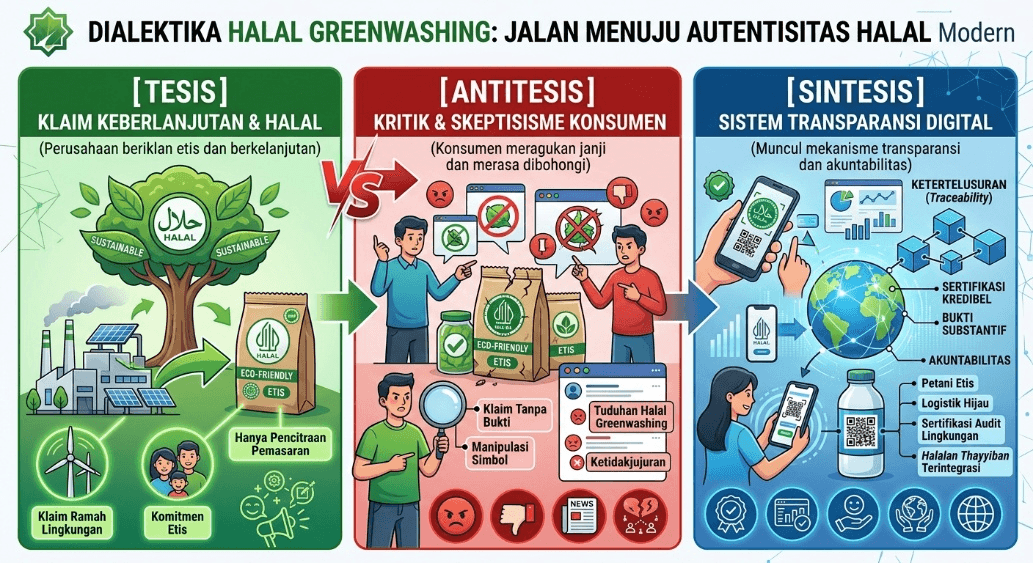
- Thesis (Sustainability & Halal Claims): This represents the initial stage, in which companies aggressively adopt ethical, religious, and environmental sustainability narratives to build a positive brand image and gain market appeal.
- Antithesis (Consumer Criticism & Skepticism): This directly challenges the thesis as increasingly informed consumers and regulatory bodies begin to identify a mismatch between the appealing promises made in promotional media and actual operational practices in the field.
- Synthesis (Digital Transparency & Integrated Certification Systems): This emerges as a potential solution that requires new accountability mechanisms to objectively bridge the gap of doubt and uncertainty.
Eroding Credence Attributes and Threatening Legitimacy
This dialectical conflict triggers a fundamental crisis because halal compliance and sustainability are considered credence attributes—qualities or product attributes that consumers cannot directly verify, even after purchasing and consuming the product. Consumers cannot visually determine whether a bottle of beverage was produced without damaging local water resources, or whether cosmetic ingredients were processed ethically without involving cruel animal testing. Therefore, producer integrity and public trust become the fundamental foundations of this business ecosystem.
If the misuse of religious symbols and environmental narratives continues without rigorous oversight, the consequences could be highly damaging. The phenomenon could trigger widespread erosion of public trust, undermine the credibility of halal brands in the international arena, and disadvantage honest producers that have made significant investments to genuinely implement environmentally friendly practices. When consumers become deeply skeptical (consumer cynicism), they may tend to generalize that all ethical claims in the market are merely marketing deceptions.
Toward Synthesis: Strengthening Accountability and Transparency
Therefore, as a synthesis of this problem, the future halal industry urgently requires much stronger accountability mechanisms that can be objectively tested and verified. Concrete action can no longer rely solely on moral appeals, but must be realized through:
- Integrated Certification: Developing audit standards that combine compliance with Islamic principles and sustainability criteria encompassing Environmental, Social, and Governance (ESG) aspects.
- Utilization of Digital Traceability Technology: Employing modern tracking systems, such as interactive QR codes or blockchain, to provide consumers with open access to information about the origins of raw materials and a product's carbon footprint in real time.
Only through data-based transparency can halal integrity and environmental responsibility be realized authentically and measurably. This approach is essential to ensuring that sustainability commitments within the halal industry do not remain merely sweet promises printed on packaging, but instead deliver tangible benefits for society and the preservation of the planet.*
Author: Budi Sutiono PN, S.E., M.M., is a lecturer in the Management Study Program, Faculty of Economics, Universitas Nahdlatul Ulama Yogyakarta. In addition to his teaching activities, he previously served as Dean of the Faculty of Economics at Universitas Nahdlatul Ulama Yogyakarta from 2018 to 2022.
Editor: Latifah
*Editorial Note: This article is the work of the author. All content, views, interpretations, and information presented are the responsibility of the author. The editorial team is not responsible for any views or opinions expressed in the article beyond the editing process undertaken for publication.
Share
Related News
-1789981449878.jpg?alt=media&token=49a1724e-8483-4973-a930-922dde4b0e37)
19 SII Students at UNU Jogja Selected for Kemenag’s Prima Magang PTKI Program
Published by Latifatussolikhah, 21 Sep, 2026 | Duration. 2 Minutes
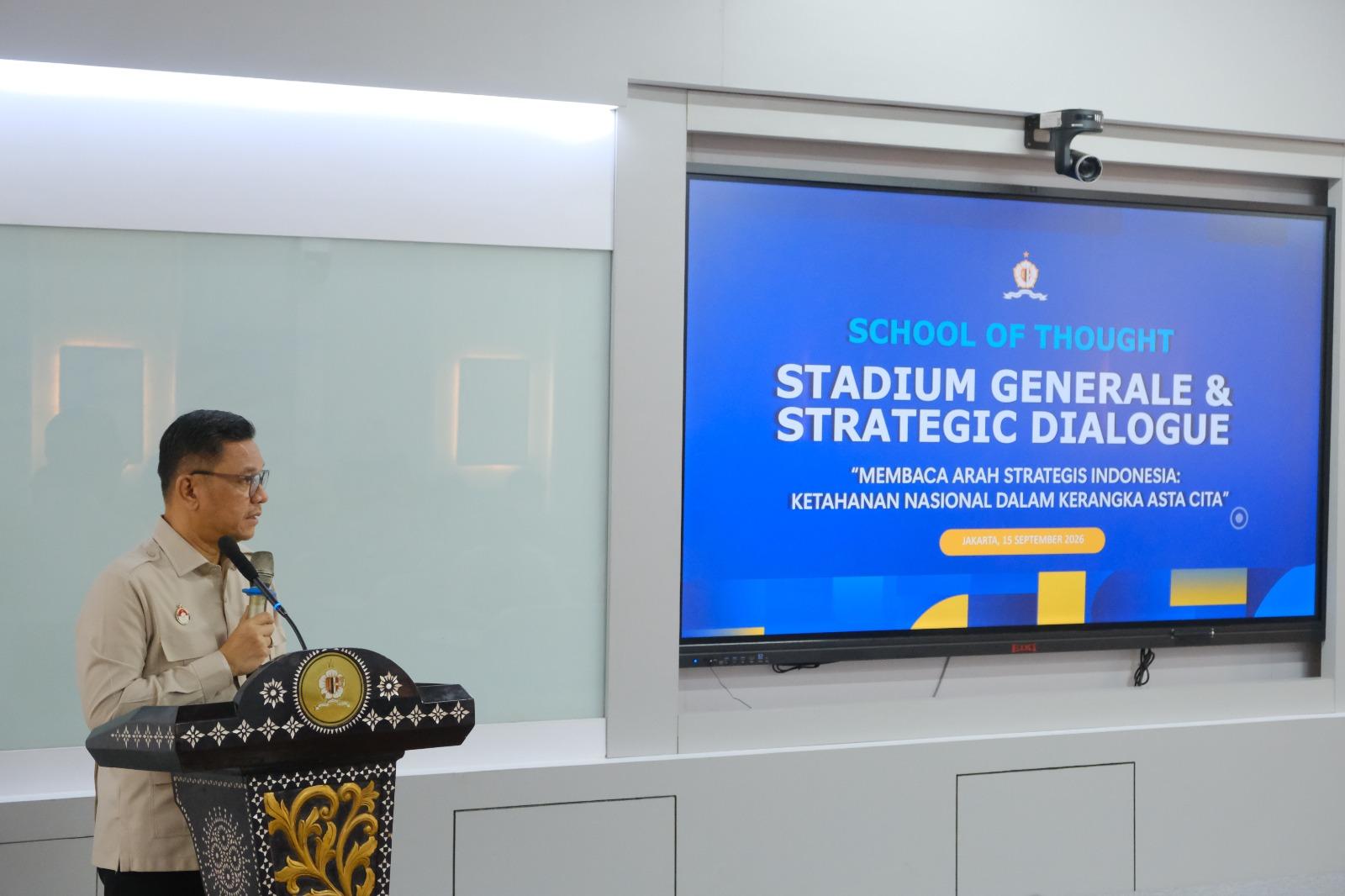
Why Education Policy Belongs in the National Policy Conversation
Published by Latifatussolikhah, 18 Sep, 2026 | Duration. 5 Minutes
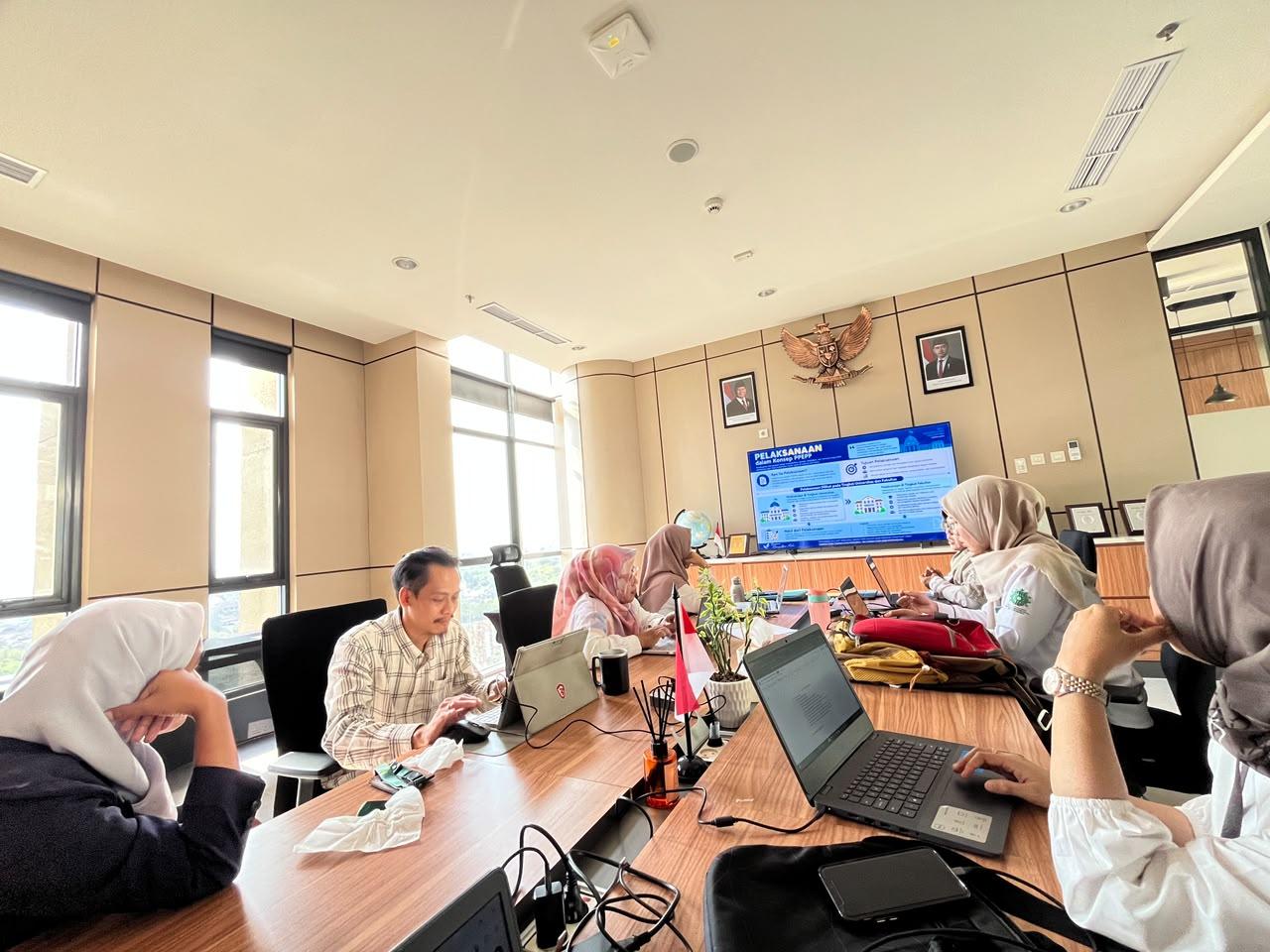
UNU Jogja Prepares for Excellent Accreditation, LPM Strengthens Faculty and Directorate Quality through PPEPP
Published by Latifatussolikhah, 17 Sep, 2026 | Duration. 2 Minutes
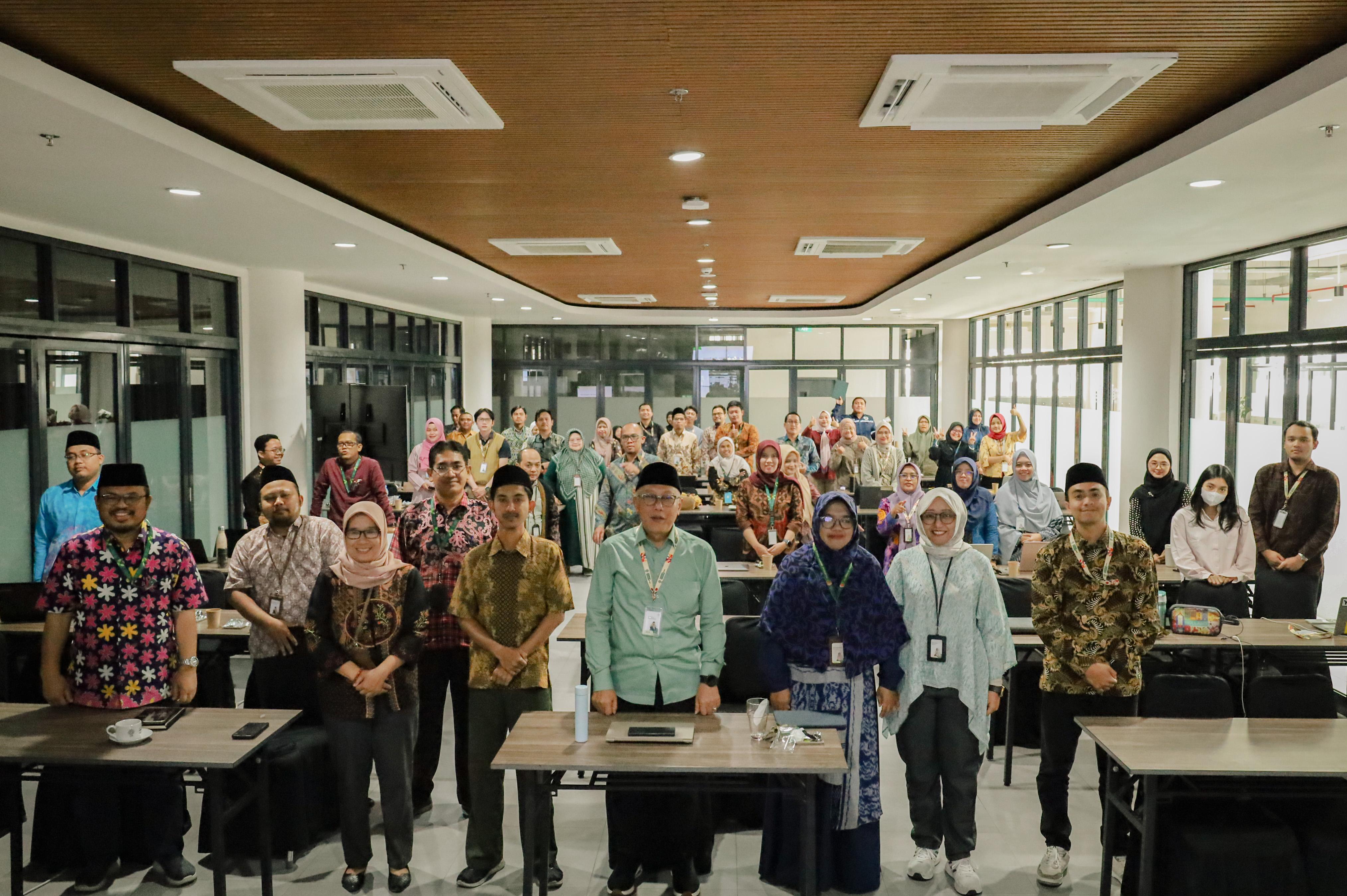
UNU Jogja Socializes RIP, Strategic Plan, and Operational Plan Toward Becoming a Globally Competitive University
Published by Latifatussolikhah, 14 Sep, 2026 | Duration. 3 Minutes
Popular News
Representing Yogyakarta, UNU Jogja Management Student Agung Putra Darmara Wins 2nd Honorable Mention at 2026 Indonesian Duta Genre
Published by Latifatussolikhah, 25 Sep, 2026 | Duration. 6 Minutes
UNU Jogja Students Pass P2MW Selection and Join KMI Expo XVII 2026
Published by Latifatussolikhah, 15 Sep, 2026 | Duration. 3 Minutes
UNU Jogja Students and Alumni Attend Coinfest Asia 2026, Joining Techies from 90 Countries to Shape the Future of Global Technology and Digital Industry
Published by Latifatussolikhah, 26 Aug, 2026 | Duration. 4 Minutes
FREQUENTLY ASKED QUESTIONS (FAQ): BEASISWA TALENTA LESTARI 2026
Published by Intan Agisti Nila Sari, 21 Jul, 2026 | Duration. 9 Minutes