UNU Yogyakarta and 21 Universities Strengthen Education for Migrant Workers’ Children in Malaysia
Published by Latifatussolikhah, 10 Nov, 2026
Est. 9 Minutes
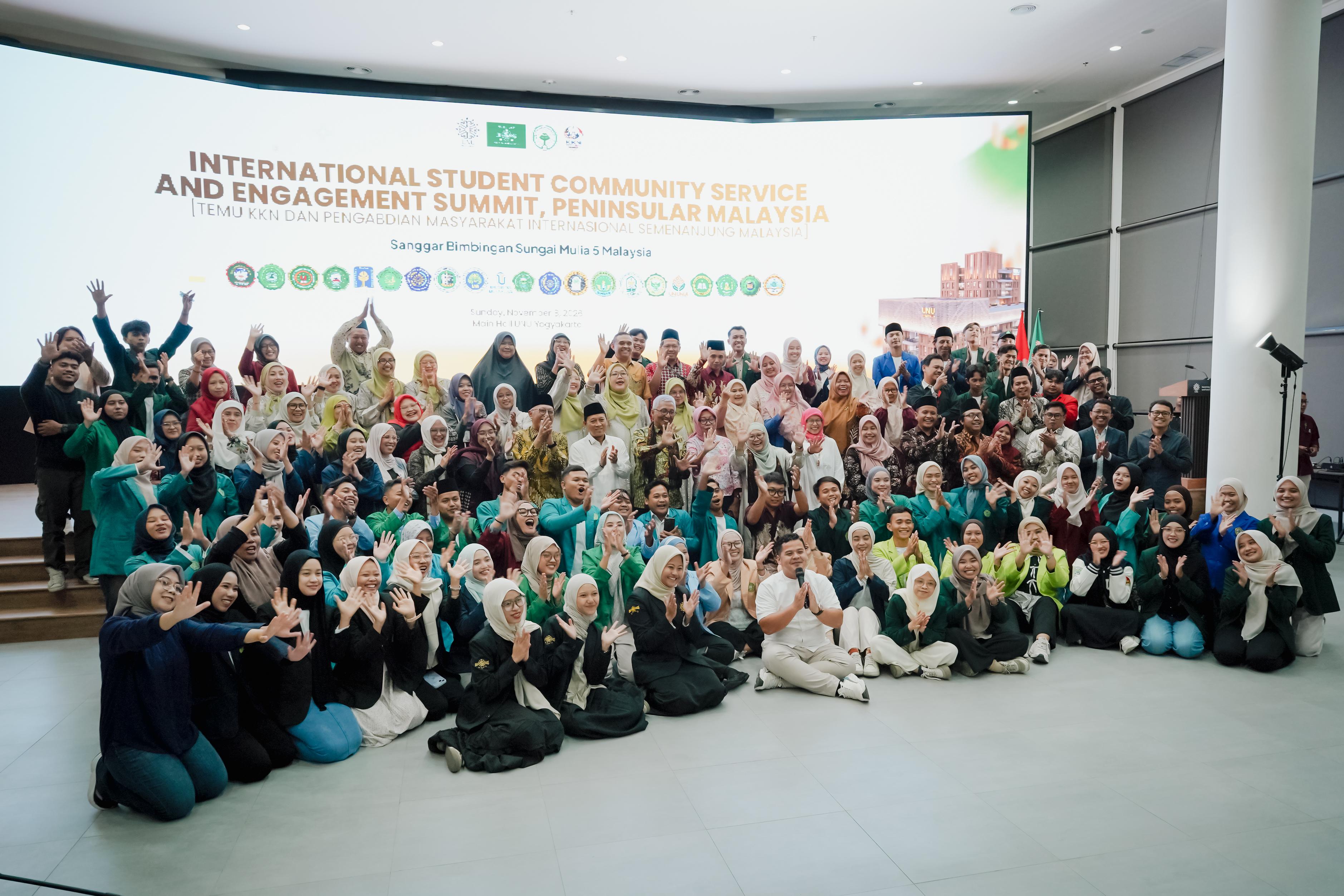
Yogyakarta, Indonesia – The education of children of Indonesian migrant workers in neighboring Malaysia has long received limited attention and is often overlooked. Higher education institutions are expected to play an active and sustainable role in improving the quality of education for these children through Community Service Programs (PkM), including the Student Community Service Program (Kuliah Kerja Nyata/KKN).
This issue was highlighted at the International Student Community Service and Engagement Summit, Peninsular Malaysia, held on Sunday, November 8, 2026. Universitas Nahdlatul Ulama Yogyakarta (UNU Yogyakarta) hosted the event, which brought together representatives from 21 universities whose students and alumni had participated in KKN programs at the Sungai Mulia 5 Learning Center in Malaysia. Approximately 150 delegates attended, including university rectors, vice rectors, deans, department heads, student alumni, and Malaysian partners.
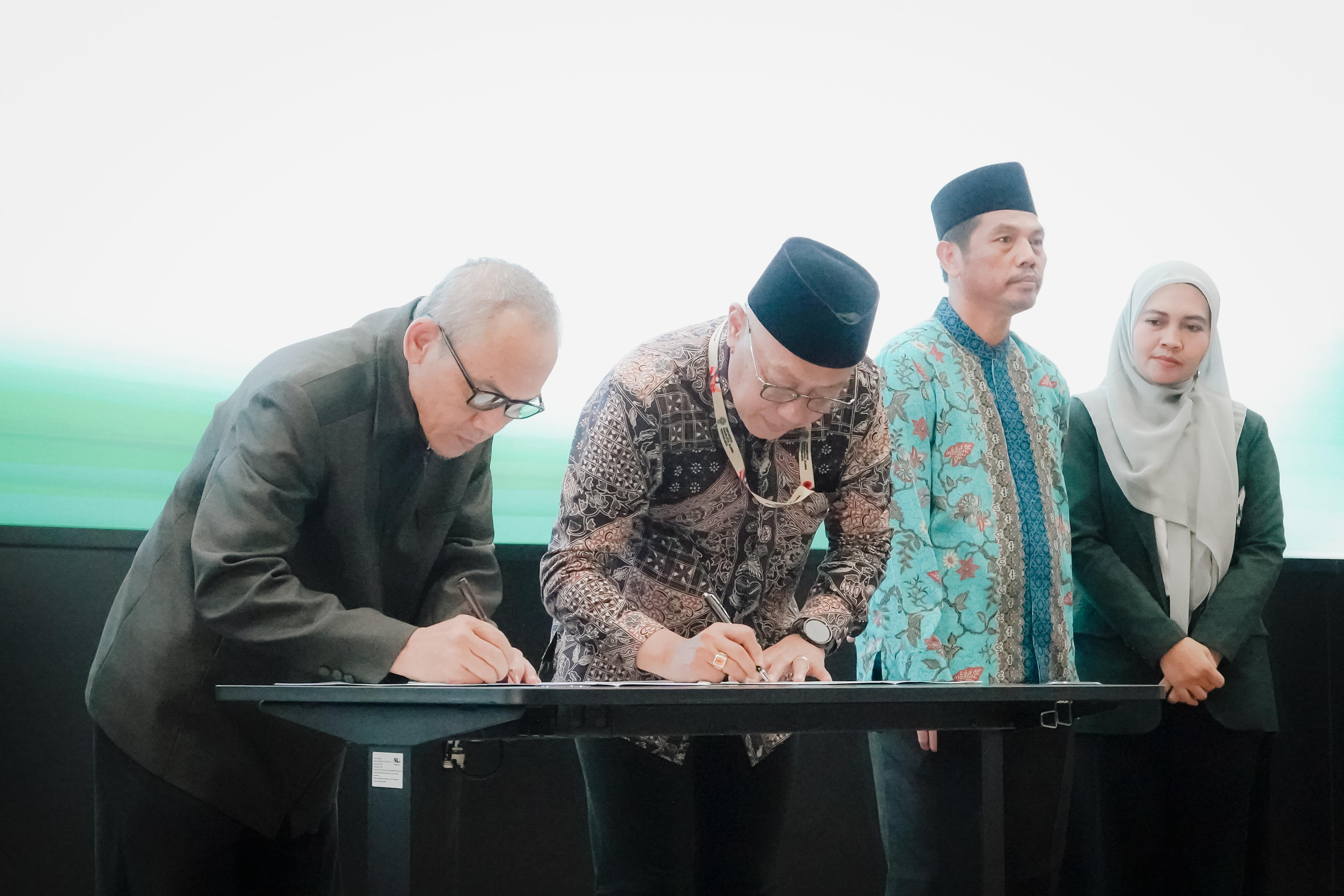
During the event, UNU Yogyakarta also signed Memoranda of Understanding (MoUs) with the Special Branch Management Board of Muslimat NU Malaysia (PCI Muslimat Malaysia) and several universities in the field of the Three Pillars of Higher Education (Tridharma Perguruan Tinggi). The collaboration covers education, research, and community service, reflecting the universities' commitment to improving educational opportunities for children of Indonesian migrant workers in Malaysia.
The gathering and collaborative initiatives represent a continuation of UNU Yogyakarta's efforts to improve educational quality for children of Indonesian migrant workers in Malaysia. Through its International Social Laboratory (Laboratorium Sosial/Labsos) program, UNU Yogyakarta has sent eight students and two lecturers to Malaysia this semester. They are involved in teaching children of migrant workers and developing thematic educational programs at the Sungai Mulia 5 Learning Center. The program is coordinated by the Indonesian School of Kuala Lumpur (Sekolah Indonesia Kuala Lumpur/SIKL), under the Embassy of the Republic of Indonesia in Kuala Lumpur.
Welcoming the KKN and community service alumni, Acting Rector of UNU Yogyakarta, Dr. Fahmy Akbar Idries, S.E., M.M., expressed his delight at having UNU Yogyakarta serve as the host of the gathering. Although the university had only recently joined the initiative, it had already received the trust and support of various stakeholders and universities that had been involved in this meaningful program for a longer period.
He emphasized that universities and their students should support valuable initiatives that have yet to receive sufficient attention, including the KKN program in Malaysia, which seeks to improve educational access for children of migrant workers.
"Through this KKN program, students will certainly gain valuable experiences. You will encounter various problems that need to be addressed. No matter how small your contribution may be, it will make a positive difference for the nation. When you return home, you can also apply your knowledge and experience to benefit communities in your respective areas," he told the students.
The event was also attended by KH. Hilmy Muhammad, a member of Indonesia's Regional Representative Council (DPD RI) representing the Special Region of Yogyakarta. Representing UNU Yogyakarta at the event were Vice Rector for Cooperation and Creative Funding Ian Agisti Dewi Rani, M.B.A.; Dean of the Faculty of Education Dr. Mustaghfiroh Rahayu, M.A.; Dean of the Faculty of Halal Industry apt. Listiana Hidayati, S.Si., M.Sc.; as well as several directors and lecturers.
Dodyawan, Chair of the Organizing Committee of the Peninsular Malaysia KKN Gathering, explained that the event was part of a series of activities held in Yogyakarta from November 7 to 9, 2026. The gathering served as a networking platform for KKN alumni who had participated in programs in Malaysia, while also providing an opportunity to discuss future program development.
"The event is not merely a reunion. We hope it will also become a platform for sharing knowledge and experiences. We have university leaders here who have achieved great success. Students and alumni can directly ask questions and seek their advice as valuable guidance for their future endeavors," Dody said.
The event was attended by representatives from 22 higher education institutions, including Universitas Ma'arif Nahdlatul Ulama (UMNU) Kebumen, Universitas Al-Hikmah Indonesia (UAI) Tuban, Universitas Wahid Hasyim (UNWAHAS) Semarang, Universitas Nahdlatul Ulama Yogyakarta (UNU Yogyakarta), Universitas Islam Indonesia (UII), and Universitas Nahdlatul Ulama Bangil (UNUBA).
Other participating institutions included Universitas Hasyim Asy'ari (UNHASY) Tebuireng Jombang, Universitas Islam Syarifuddin Lumajang, Universitas Islam Tribakti Lirboyo Kediri, Universitas Muhammadiyah Surakarta (UMS), Universitas Islam Zainul Hasan Genggong Probolinggo, Universitas Muhammadiyah Ponorogo, Universitas Muria Kudus, and Universitas Islam Negeri Maulana Malik Ibrahim Malang.
Representatives also came from Universitas Tarbiyatut Tholabah, Universitas Negeri Malang, Universitas Nahdlatul Ulama Makhdum Ibrahim (UNUMA Tuban), Universitas Uluwiyah Mojokerto, Institut Agama Islam Sunan Giri (INSURI) Ponorogo, Institut Agama Islam Nahdlatul Ulama (IAINU) Kebumen, Institut Agama Islam Ngawi, and Sekolah Tinggi Agama Islam Nahdlatul Ulama (STAINU) Madiun.
Dra. Mimin Mintarsih, Head of the Sungai Mulia 5 Learning Center in Malaysia, expressed her appreciation for UNU Yogyakarta's support in hosting the gathering. UNU Yogyakarta has also demonstrated its commitment through the Labsos program by sending students to teach children of migrant workers. This support is particularly meaningful given that the learning center operates independently through self-funded community initiatives.
The Sungai Mulia 5 Learning Center currently serves 175 children and is one of 78 learning centers across Peninsular Malaysia. In total, more than 2,200 students are enrolled in learning centers throughout the region. Their education is supported by KKN programs from various Indonesian universities, including UNU Yogyakarta.
"To date, 64 cohorts of university students have participated in KKN programs at our learning center. These students have helped educate the children of Indonesian migrant workers in Malaysia. The children no longer feel marginalized or isolated," said Mimin, who also serves as Chair of PCI Muslimat NU Malaysia.
Educational Challenges Facing Children of Indonesian Migrant Workers
During a talk show entitled "Children's Education and Migrant Worker Empowerment in Malaysia: Achievements, Challenges, and Future Opportunities," moderated by UNU Yogyakarta lecturer Dr. Murdianto, M.Si., Mimin discussed various challenges faced by the Sungai Mulia 5 Learning Center in providing education for children of Indonesian migrant workers.
When the learning center was first established in 2019, it even faced opposition from some members of the Indonesian migrant worker community.
"Those who disagreed were concerned about security issues. They also thought the presence of many children would create noise and disrupt the surrounding environment. We were even reported to the police twice and to the Malaysian Ministry of Education," Mimin explained.
Nevertheless, Mimin refused to give up. She explained to representatives of the Malaysian Ministry of Education and the police that the children of Indonesian migrant workers had very limited access to education. She emphasized that learning centers could help ensure that these children continued to exercise their right to education. Beyond formal learning, the centers also provide positive activities, including religious education, arts, and cultural programs.
After hearing her explanation, the Malaysian police actually encouraged the learning center to continue its activities.
"To this day, we continue operating despite receiving no financial assistance. We also never force parents to contribute financially toward their children's education at our learning center," she explained.
Mimin received the 2022 Hassan Wirajuda Award for the Protection of Indonesian Citizens Overseas from Indonesia's Ministry of Foreign Affairs in the Civil Society category, in recognition of her dedication to advocating for the educational rights of Indonesian children in Malaysia.
Meanwhile, Dato' Indera Hermono, S.Sos., M.A., who served as Indonesia's Ambassador Extraordinary and Plenipotentiary to Malaysia from 2020 to 2025, emphasized that migrant workers' activities should not be viewed solely from an economic perspective but also through the lens of legal protection.
He explained that Law No. 18 of 2017 concerning the Protection of Indonesian Migrant Workers places greater emphasis on the concept of "protection" rather than merely "placement," as reflected in the previous regulations.
"Under this law, those entitled to protection are not only migrant workers themselves but also their family members. This represents a new paradigm that remains largely unknown and overlooked," he stated.
Such protection for migrant workers' families includes children's right to education. Learning centers supported by university KKN programs are expected to help address this challenge.
"The issues surrounding migrant workers are complex. However, their children also have fundamental human rights, particularly the right to education. This is where learning centers play a vital role, and ensuring their sustainability is essential," he added.
Representing higher education institutions, Rennanti Lunnadiyah Aprilia, M.P., Vice Rector of Universitas Ma'arif Nahdlatul Ulama (UMNU) Kebumen, reminded universities and students to consider various aspects when implementing international KKN programs, particularly when addressing critical issues such as the education of migrant workers' children.
"International KKN programs must adopt a transformative approach. This includes providing cross-semester mentoring and follow-up evaluations, strengthening the capacity of local teachers through collaboration, transferring teaching methods, learning materials, and simple operational systems, as well as measuring children's learning progress and ensuring program sustainability," Rennanti explained.
As part of the gathering, UNU Yogyakarta also facilitated a Focus Group Discussion (FGD) entitled "Roadmap and Program Planning for KKN and Community Service in Peninsular Malaysia." The discussion was moderated by Joko Susilo, S.IP., CMT, Director of Community Service and Social Laboratory Programs at UNU Yogyakarta.
The FGD identified children's character development, program sustainability, and governance as key priorities. Discussions covered existing conditions, major challenges, root causes, potential solutions, and the roadmap for program implementation.
The discussion was structured around five key frameworks: regulatory, institutional, programmatic, funding, and monitoring and evaluation frameworks.
Proposed solutions included developing learning modules, establishing a program handover system to ensure continuity between student cohorts, implementing project monitoring mechanisms, maintaining learning journals, and developing an integrated database to document program achievements, alongside other recommendations.
Joko expressed hope that the International KKN and Community Service Gathering in Peninsular Malaysia would mark a positive beginning for UNU Yogyakarta's involvement in international community service networks and social laboratory initiatives.
"Through our International Labsos program, which began in Malaysia by involving students in teaching children of Indonesian migrant workers, UNU Yogyakarta aims to expand access to education for all. At the same time, the program provides lecturers with opportunities to serve communities. UNU Yogyakarta's participation also seeks to address real-world challenges, actualize the relevance of academic knowledge, and strengthen multi-stakeholder collaboration in advancing the concept of an Impactful University (Kampus Berdampak) across Southeast Asia," he concluded. []
Reporter : Arif
Share
Related News

UNU Jogja Joins the UN Global Compact, Strengthening Global Collaboration on Sustainability
Published by Latifatussolikhah, 9 Nov, 2026 | Duration. 4 Minutes
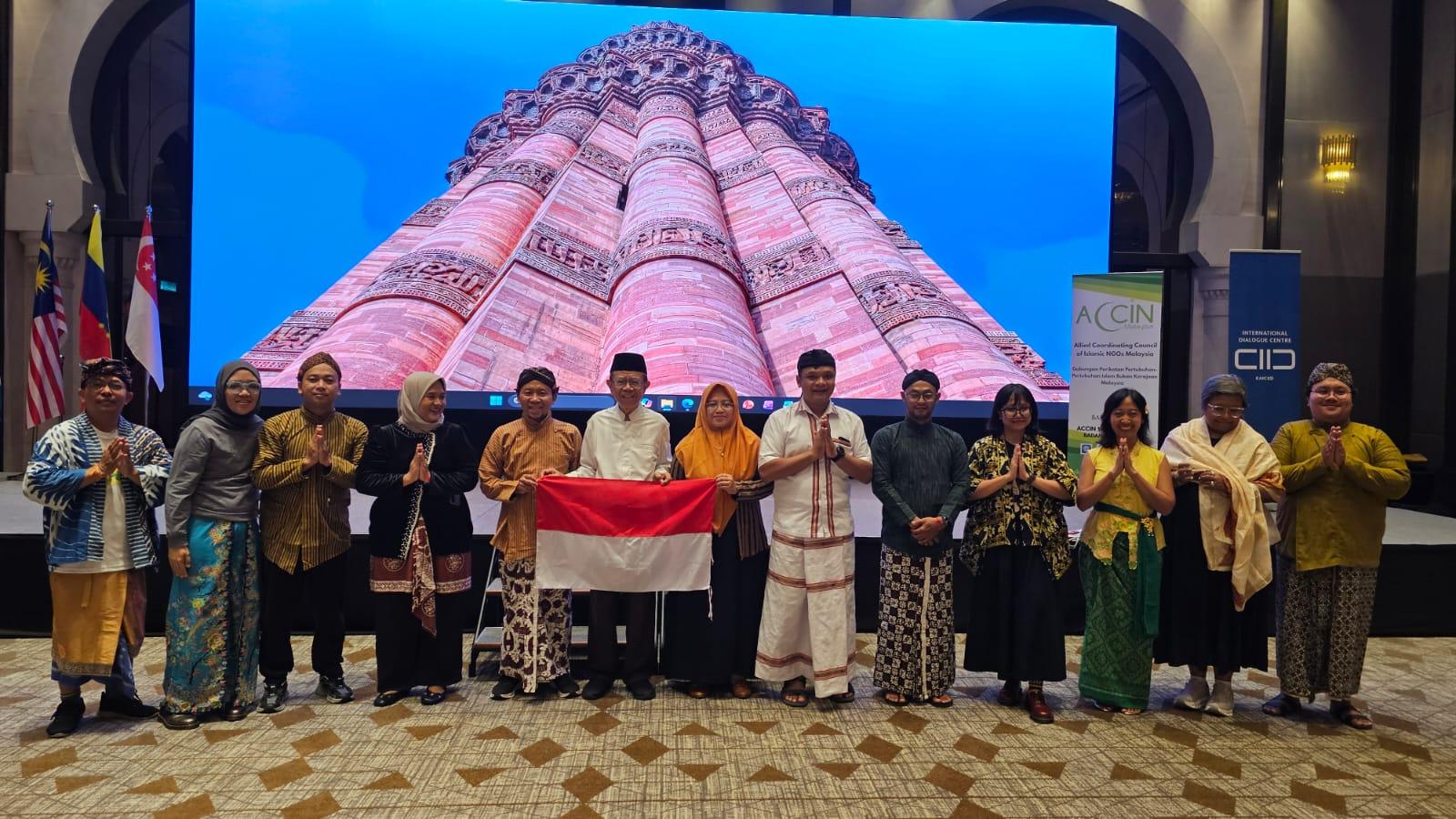
UNU Jogja Delegation Discusses Inclusive Interfaith Dialogue at the 3rd Dialogue Cities Conference in Kuala Lumpur
Published by Latifatussolikhah, 2 Nov, 2026 | Duration. 4 Minutes
UNU Jogja Signs Cooperation Agreements with Five NU Universities at LPTNU 2021–2026 Leadership Farewell Ceremony
Published by Latifatussolikhah, 2 Nov, 2026 | Duration. 4 Minutes