
After the Tahlil, Kaliabu Kidul Residents Celebrate Independence with a Karaoke Contest
Published by Latifatussolikhah, 20 Aug, 2026
Est. 9 Minutes
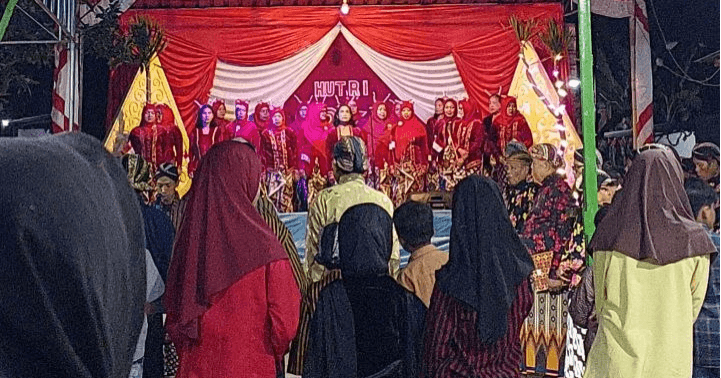
The song “Nyidam Sari” echoed repeatedly across the courtyard of Darussalam Mosque in Kaliabu Kidul Hamlet, Banyuraden Village, Gamping Subdistrict, Sleman Regency, on Sunday evening, August 16, 2026. Rather than being performed by professional singers, the campursari song was sung by local residents as part of a karaoke contest held to celebrate the 81st anniversary of the Republic of Indonesia.
The contestants were not young people who were accustomed to performing on entertainment stages. Sixteen men and sixteen women took turns showcasing their singing abilities in front of their neighbors. The competition was divided into separate categories for men and women. Participants were judged based on vocal quality, appearance, costumes, confidence, and song selection.
“Nyidam Sari” was the song performed most frequently that evening. The campursari song, composed by Manthous and widely known within the Javanese musical tradition, added a distinctive touch of Javanese culture to the village’s Independence Day celebrations.
Around 200 residents gathered to attend the evening event as part of an annual tirakatan ceremony. The event began at 7:30 p.m. with a ceremony and the singing of the Indonesian national anthem, “Indonesia Raya.” Residents then listened to a speech by the Governor of the Special Region of Yogyakarta, Sri Sultan Hamengku Buwono X. The program continued with tahlil and communal prayers as an expression of gratitude and a tribute to those who sacrificed their lives for Indonesia’s independence.
After the tahlil, the atmosphere gradually changed. The stage, which had initially been used for the formal part of the ceremony, became a space for community entertainment. Music began to play, contestants were called one by one, and the karaoke contest continued until the entire event ended at around 11:30 p.m.
A Tradition That Grew After Independence
Tirakatan is commonly held on the evening of August 16, several hours before Independence Day celebrations. The tradition can be found in many parts of Java, particularly in Yogyakarta and Central Java. Its activities vary, ranging from communal prayers, tahlil, communal meals, moments of silence, readings of the Proclamation of Independence, the cutting of tumpeng, to traditional arts performances.
The term tirakatan derives from the Javanese word tirakat. According to the Kamus Besar Bahasa Indonesia (Indonesian Dictionary), tirakat refers to restraining one's desires or undertaking certain practices for spiritual purposes. In Javanese culture, tirakat is also understood as a form of self-discipline, spiritual restraint, and inner reflection.
In the context of Independence Day commemorations, tirakatan has come to serve as an opportunity to reflect on the nation's struggle. Residents not only celebrate Indonesia's independence but are also invited to remember the sacrifices made to achieve it. The tradition can be found in both rural and urban communities, particularly at the neighborhood, village, and local community levels.
Over time, tirakatan has evolved beyond personal reflection. The tradition has developed into a communal activity that brings together residents from different backgrounds. Prayers, zikir, and reflection are combined with social activities, food sharing, traditional arts, and community entertainment. The arrangement of activities can be adapted to the needs of each community. As a result, not every village celebrates tirakatan in the same way.
At the tirakatan in Kaliabu Kidul, there was no tumpeng, which is commonly served by residents in other communities on the occasion. Nevertheless, gratitude was expressed through tahlil, prayers, and togetherness. The absence of tumpeng shows that the implementation of tirakatan does not depend on a particular type of food or ceremony. The event was funded through community donations, with residents contributing according to their means so that the annual tradition could continue.
RW 13 Chairman Sukir, together with local residents and young people, was involved in organizing the event. Teenagers from the Kaliabu RW 13 Youth Organization (Karang Taruna) helped prepare and run the activities. The involvement of young people is important in ensuring the continuity of the tradition. They were not merely spectators but also helped with technical preparations and ensured that the event ran smoothly. Meanwhile, the entertainment stage was given to local men and women.
The 32 contestants made the karaoke competition an important part of the celebration. The judging criteria, which included costumes, performance style, and confidence, also showed that residents were not simply looking for the best voice. On that stage, courage and the ability to entertain the community were valued alongside vocal ability.
An Interfaith Tirakatan in Kulon Progo
A unique way of celebrating tirakatan could also be found in Karangwetan Hamlet, Salamrejo Village, Sentolo Subdistrict, Kulon Progo Regency. Residents held the tirakatan in a traditional joglo belonging to a resident of RT 18. Its most distinctive feature was a communal prayer led in turn by religious leaders from Islam, Christianity, and Catholicism. Tolerance was not merely discussed in speeches but practiced together in the same space.
The event also featured a panembromo performance by a group of women and a youth choir. After the tumpeng was cut by Karangwetan Hamlet Head, the first piece was presented to a representative of the younger generation. The simple ceremony could be interpreted as a symbol of passing on the responsibility of preserving independence and harmony to the next generation.
Srunthul Awakens from Its Slumber
In Kaliajir Lor Hamlet, Kalitirto Village, Berbah Subdistrict, Sleman Regency, residents used the tirakatan evening as a stage to revive the traditional Srunthul performance. The folk art was presented at the end of the event on the Kaliajir Lor volleyball court.
Although the performance featured only an excerpt from the story, the appearance of Srunthul was significant as the traditional art is increasingly rarely performed. Independence Day celebrations thus became not only a space to remember national history but also an opportunity to preserve the cultural memory of the village.
Gunungan and Cucuk Lampah in Gemawang
Residents of Gemawang Hamlet, Sinduadi Village, Mlati Subdistrict, Sleman Regency, incorporated a procession featuring a traditional Javanese gunungan into their tirakatan. The gunungan was accompanied by a cucuk lampah, who walked at the front of the procession as a ceremonial guide.
The procession brought together national identity and local culture. Residents still sang “Indonesia Raya” and reflected on the struggles of the nation's heroes, but they celebrated independence through symbols that were closely connected to Javanese society.
Gunungan are commonly arranged as symbols of gratitude, prosperity, and the fruits of collective labor. Their presence transformed the tirakatan from a gathering centered solely on sitting and praying into a cultural procession involving a wider part of the community.
A Stage Set Against an Unfinished Construction Site
Limited space did not stop residents of Karangasem in Gempol Hamlet, Condongcatur Village, Depok Subdistrict, Sleman Regency, from organizing their tirakatan. They used a simple area with an unfinished construction site as the backdrop for the stage.
Children performed artistic creations, residents sang in a choir, and the community gathered to remember the nation's struggle. The unfinished structure provided a distinctive visual backdrop unlike the stages typically found in village celebrations.
Symbolically, the unfinished building could also represent the ongoing struggle of independence. Indonesia has been independent for 81 years, but the work of creating a just, safe, and prosperous society is far from complete. Like the construction site, independence must continue to be built.
Discussing the Threats of the Digital Age
In Bantar Wetan Hamlet, Banguncipto Village, Sentolo Subdistrict, Kulon Progo Regency, the tirakatan became a space to discuss the challenges faced by society today.
Bantar Wetan Hamlet Head Surono reminded residents of the risks associated with technological development, ranging from harmful content and online gambling to drug abuse. These issues are considered increasingly close to children's daily lives in the community.
The message gave the meaning of the struggle a more contemporary context. If previous generations fought against colonialism, families today face threats that can enter through mobile phones and affect household life.
The tirakatan in Bantar Wetan was also enlivened by poetry readings and dance performances. Previously, residents had organized competitions for children and adults, as well as sports activities.
Independence Nurtured from the Smallest Communities
The various tirakatan celebrations across Yogyakarta show that traditions can survive without being confined to a single form. Some communities choose interfaith prayers, revive traditional arts, organize gunungan processions, build stages amid unfinished construction, or discuss the threats posed by the digital age.
In Kaliabu Kidul, independence was celebrated through tahlil and a karaoke contest for local men and women. The celebration was simple, but it carried an important social function. Around 200 people set aside their individual routines to gather as a community. That evening, the courtyard of Darussalam Mosque became a space that brought together three elements at once: nationalism, religious devotion through tahlil, and popular entertainment through the karaoke contest.
Tirakatan has its strength in bringing people together on equal footing. There is little distance between community leaders, young people, older residents, and children. Everyone comes together as neighbors who share the same living environment and the same future for their community.
Perhaps independence does not always have to be celebrated through grand events. In the villages of Yogyakarta, independence lives through small acts: setting aside money for donations, helping young people prepare events, praying for those who came before, maintaining harmony, and applauding a neighbor who has the courage to sing.*
Contributor: Nofita Nur Safitri, a 2022 student of the Elementary School Teacher Education (PGSD) Study Program at UNU Jogja. She has been actively writing since 2017, beginning her journey as a journalist with Indonesian Scout Journalist. She has more than seven years of experience in writing, has authored three literary books, participated in around 20 national-level poetry competitions, and contributed articles to the Purbalingga Regency Scout media. She is currently implementing the GerakDampak Academy social action program by the Indika Foundation.
Editor: Latifah
*Editorial Note: This article is contributed by an external writer. All content, views, interpretations, and information presented are the responsibility of the author. The editorial team is not responsible for any opinions or views expressed in the article, except for editorial adjustments made for publication purposes.
Share
Related News

Closing Ranks for the Welfare of Nahdlatul Ulama’s Jamaah and Jam’iyah
Published by Latifatussolikhah, 11 Sep, 2026 | Duration. 5 Minutes
Reflecting on the Prophet’s Birthday: Becoming Good in the Prophet’s Eyes
Published by Latifatussolikhah, 28 Aug, 2026 | Duration. 5 Minutes
Reflecting on the Meaning of Freedom Through Prayer and Community Togetherness
Published by Latifatussolikhah, 24 Aug, 2026 | Duration. 9 Minutes
Following the Example of Prophet Muhammad, UNU Jogja Encourages Civitas to Strengthen Love and Exemplary Values
Published by Latifatussolikhah, 24 Aug, 2026 | Duration. 3 Minutes